
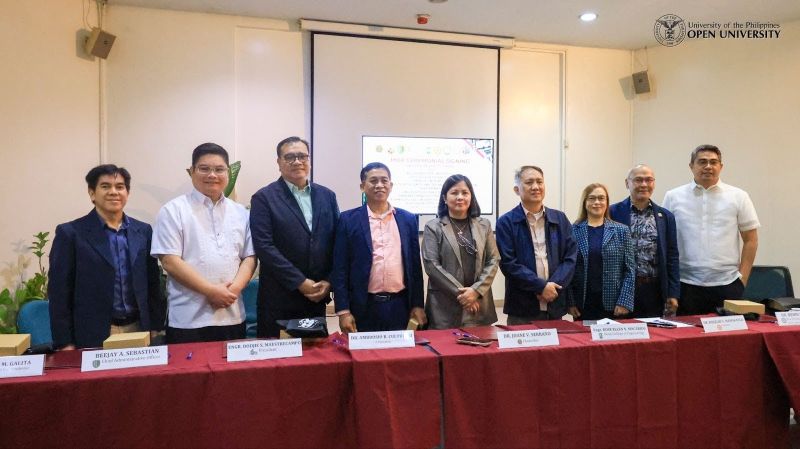
UPOU Chancellor Joane V. Serrano (5th from left) with the principal signatories during the ceremonial signing of the Consortium for the Taiwan Semiconductor Microcredentials.
The University of the Philippines Open University (UPOU) formalized a consortium agreement with higher education institutions to advance microcredential programs in semiconductor education and training on 10 April 2026, at the UPOU Satellite Office in Diliman, Quezon City.
The Memorandum of Agreement (MOA) establishes the Consortium for the Taiwan Semiconductor Microcredentials, bringing together state universities, private institutions, and local colleges in the country in a unified effort to strengthen the country’s talent pipeline in the semiconductor sector.
Participating institutions include Bulacan State University, City College of Angeles, Eulogio “Amang” Rodriguez Institute of Science and Technology, Mapúa University, Mariano Marcos State University, Technological University of the Philippines, University of Science and Technology of Southern Philippines, and the University of the Cordilleras.
The consortium aims to equip students with industry-relevant skills through online microcredential courses focused on semiconductor design, manufacturing, testing, and advanced electronics systems. It also seeks to identify high-performing learners who may be endorsed for training opportunities in Taiwanese semiconductor factories.
Hosting the ceremony was Dr. Roberto B. Figueroa, Jr., Dean of the UPOU Faculty of Information and Communication Studies, who described the partnership as a “momentous” step in bringing together diverse institutions to respond to evolving industry demands.
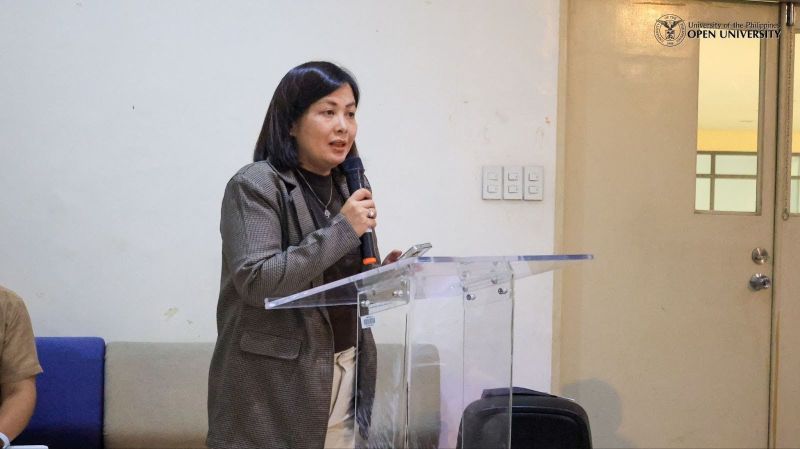
UPOU Chancellor Serrano delivers her opening remarks.
In her welcome message, UPOU Chancellor, Dr. Joane V. Serrano, underscored the significance of the collaboration, calling it a milestone in building a shared program that aligns education with emerging technological needs.
“This partnership is very important to us,” Serrano said, noting that the initiative is expected to provide students with both technical skills and access to industry networks. “It opens doors—not only for learners but also for universities to be part of a stronger industry-academe collaboration.”
Commission on Higher Education (CHED) Commissioner Michelle Aguilar Ong, in a recorded message, highlighted the broader national relevance of the initiative, particularly in enhancing innovation and global competitiveness through academic partnerships.
Leaders and representatives from partner institutions expressed their support for the consortium, emphasizing its potential to transform education and workforce development. Bulacan State University, represented by Vice President for Academic Affairs Warlito M. Galita, described the agreement as more than a formal document, but a symbol of shared commitment to accessible and inclusive education. City College of Angeles Chief Administrative Officer Beejay A. Sebastian conveyed appreciation for being included in the initiative, while Eulogio “Amang” Rodriguez Institute of Science and Technology President Dr. Rogelio T. Mamaradlo stressed the need for the Philippines to keep pace with global advancements in semiconductor technology.
In the same way, Mapúa University President, Engr. Dodjie Maestrecampo said the consortium is “architecting the future,” noting that it complements ongoing national efforts to strengthen workforce readiness and ladderized education in technical fields. Mariano Marcos State University Vice President for Resource Generation and Management, Dr. Bjorn Santos, expressed his appreciation for MMSU’s inclusion in the consortium, highlighting the opportunity to collaborate with partner institutions to advance semiconductor education and strengthen industry linkages.
Technological University of the Philippines President Dr. Reynaldo P. Ramos highlighted the foundational role of semiconductors in modern society, while University of Science and Technology of Southern Philippines President Dr. Ambrosio B. Cultura II emphasized the urgency of catching up with other Asian countries in the sector. Representing the University of the Cordilleras, Engr. Rose Ellen Macabiog said the partnership affirms the role of education in driving technological advancement and expressed optimism for a strong, mutually beneficial collaboration.
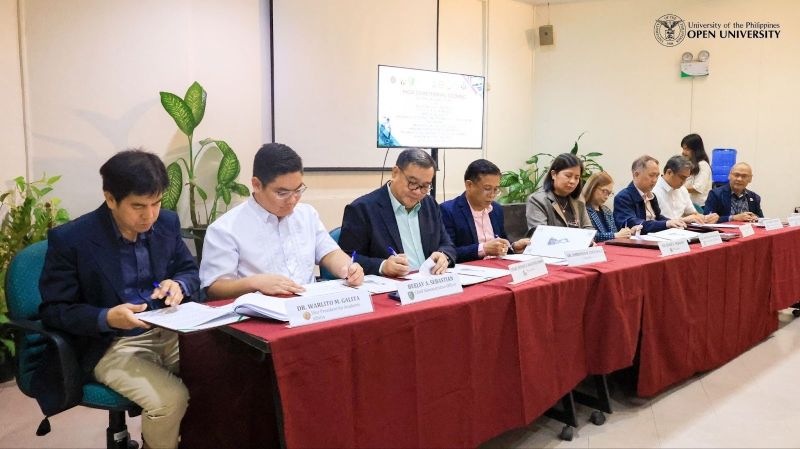
Principal signatories representing the HEIs during the signing.
The ceremony concluded with the formal signing of the agreement, followed by the presentation of tokens and a networking session among participating institutions.
The newly formed consortium signals a coordinated effort among Philippine higher education institutions to align academic programs with industry needs, expand access to specialized training, and position Filipino learners for opportunities in the global semiconductor landscape.
Written by Marinela Hernandez | Edited by Primo G. Garcia, Roberto Figueroa, Jr., Jessa Perez and Anna Cañas-Llamas | Photo by Dianne Cosinas