
The University of the Philippines Open University (UPOU), the International Council for Open and Distance Education (ICDE), and the University of the Philippines Cebu (UP Cebu) hosted a Knowledge Dialogue on “Grounding the Future of Education: Emerging Practices Toward Inclusive, Scalable, and Sustainable Learning Systems” on 23 September 2026 at the Performing Arts Hall of UP Cebu in Cebu City.
The dialogue brought together education stakeholders to discuss emerging practices, key issues, and opportunities for collaboration in developing learning systems that are inclusive, scalable, sustainable, and resilient amid changing educational contexts.
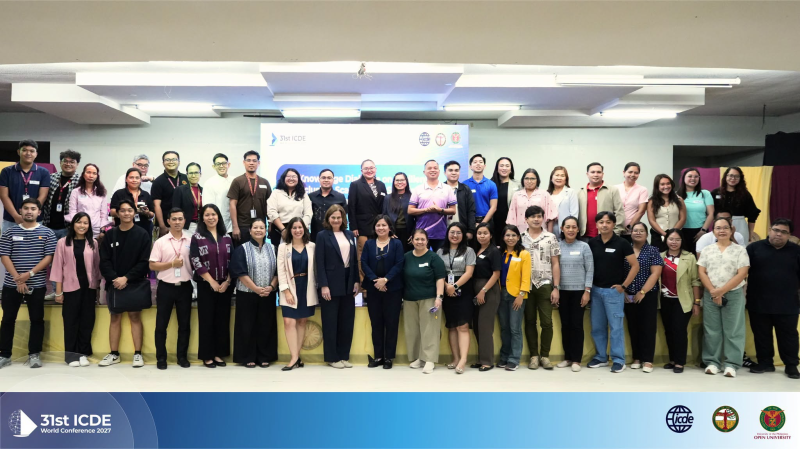
Representatives from UPOU, ICDE, UP Cebu, and various sectors of the education community come together for the ICDE Knowledge Dialogue held on 23 September 2026 at the UP Cebu Performing Arts Hall.
In her opening remarks, Dr. Daisy A. Romeo, Director of the UP Cebu Central Visayas Studies Center, highlighted the University of the Philippines’ commitment to harnessing education, research, public service, and collaboration to help learners and communities translate knowledge into action and contribute to meaningful societal change.
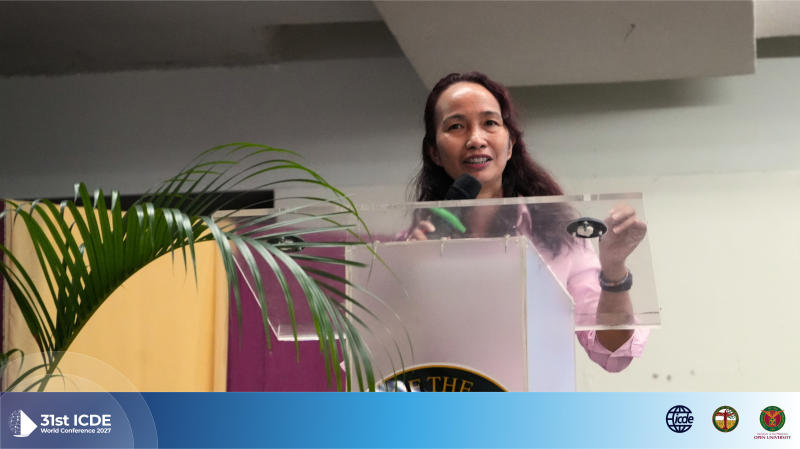
Dr. Daisy A. Romeo, Director, UP Cebu Central Visayas Studies Center delivers the opening remarks at the ICDE Knowledge Dialogue in Cebu.
ICDE Secretary General Ms. Torunn Gjelsvik highlighted the role of flexible, online, and distance learning in expanding access to quality education. “Equal access is not the same as equitable access,” she said, stressing that education must also be affordable, relevant, recognized, and quality-assured.
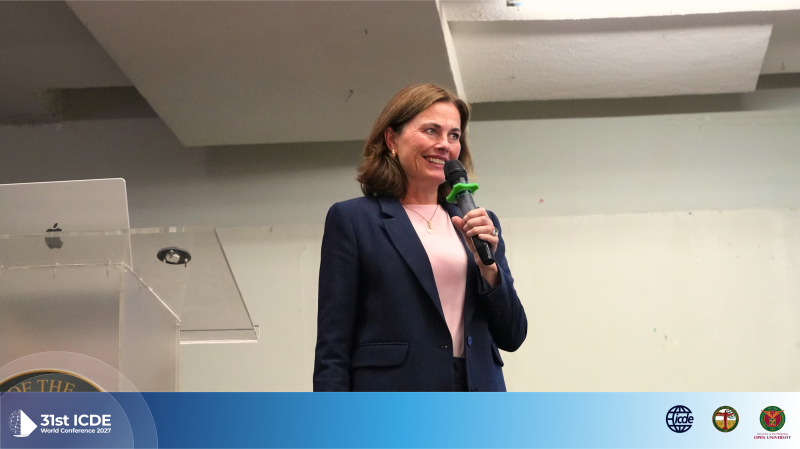
ICDE Secretary General Ms. Torunn Gjelsvik provides the global context of inclusive, scalable, sustainable educationat the ICDE Knowledge Dialogue in Cebu.
Bringing the discussion to the Philippine context, UPOU Chancellor Dr. Joane V. Serrano highlighted the importance of learning systems that can continue amid disruptions, including the haze affecting face-to-face classes in Cebu at the time of the dialogue. Serrano stressed that flexible learning goes beyond simply moving lectures online. It must also enable learners to participate, persist, complete their studies, and ultimately benefit from their educational experience.
“Inclusion is not only about who gets through our university door, it is also about whether the way we design learning recognizes the different realities of our learners,” Serrano said.
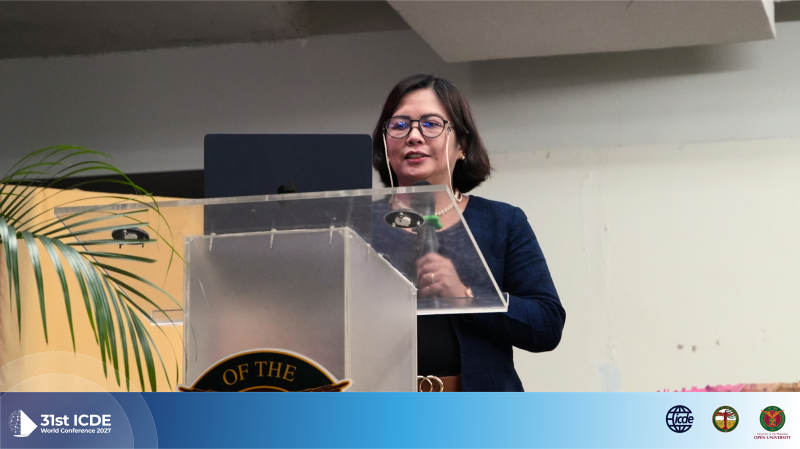
UPOU Chancellor Dr. Joane V. Serrano shares about the national context of inclusive, scalable, sustainable education at the ICDE Knowledge Dialogue in Cebu.
Providing the local context, UP Cebu Vice Chancellor for Academic Affairs Asst. Prof. Palmi Marinel P. Tudtud emphasized that “transformative education requires transformative systems,” highlighting the interconnectedness of physical and digital learning spaces.
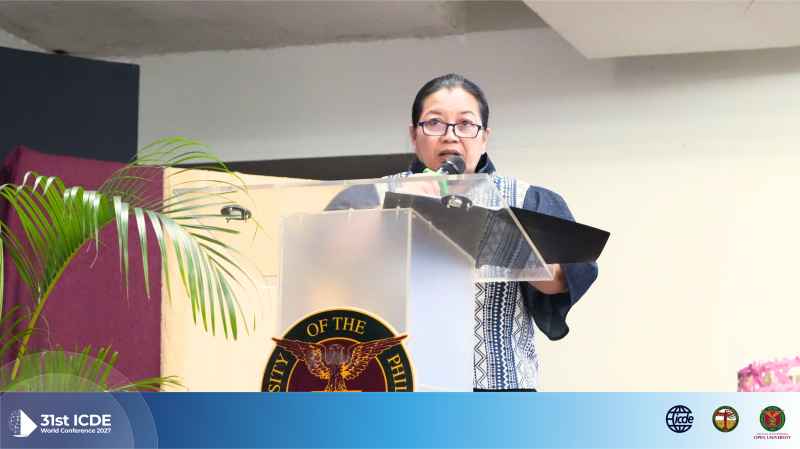
UP Cebu Vice Chancellor for Academic Affairs Asst. Prof. Palmi Marinel P. Tudtud presents the local perspective on emerging education practices at the ICDE Knowledge Dialogue in Cebu.
The presentations were followed by roundtable discussions among participants from different sectors of the education community on inclusive, flexible, and technology-mediated learning systems.
The first group discussed the use of AI as an assistive tool and emphasized that it should complement, rather than replace, human expertise. Another group stressed that digitalization should contribute to improving pedagogy, assessment, and learning outcomes. The third group highlighted the social, economic, geographic, cultural, technological, and financial factors that affect participation in education as well as the need to maximize available resources and adapt practices to diverse learner needs.
The Knowledge Dialogue brought together local perspectives on the challenges and responses in developing flexible and responsive learning systems. These discussions provided insights that will contribute to the conversations leading up to the 31st ICDE World Conference, which UPOU will host on 15–19 November 2027 in Cebu, Philippines.
Written by Primo Garcia with report from Diane Cosinas | Edited by Anna Cañas-Llamas | Photos by Diane Cosinas