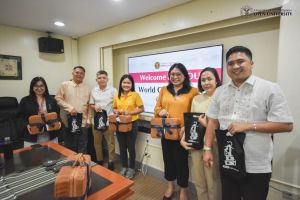


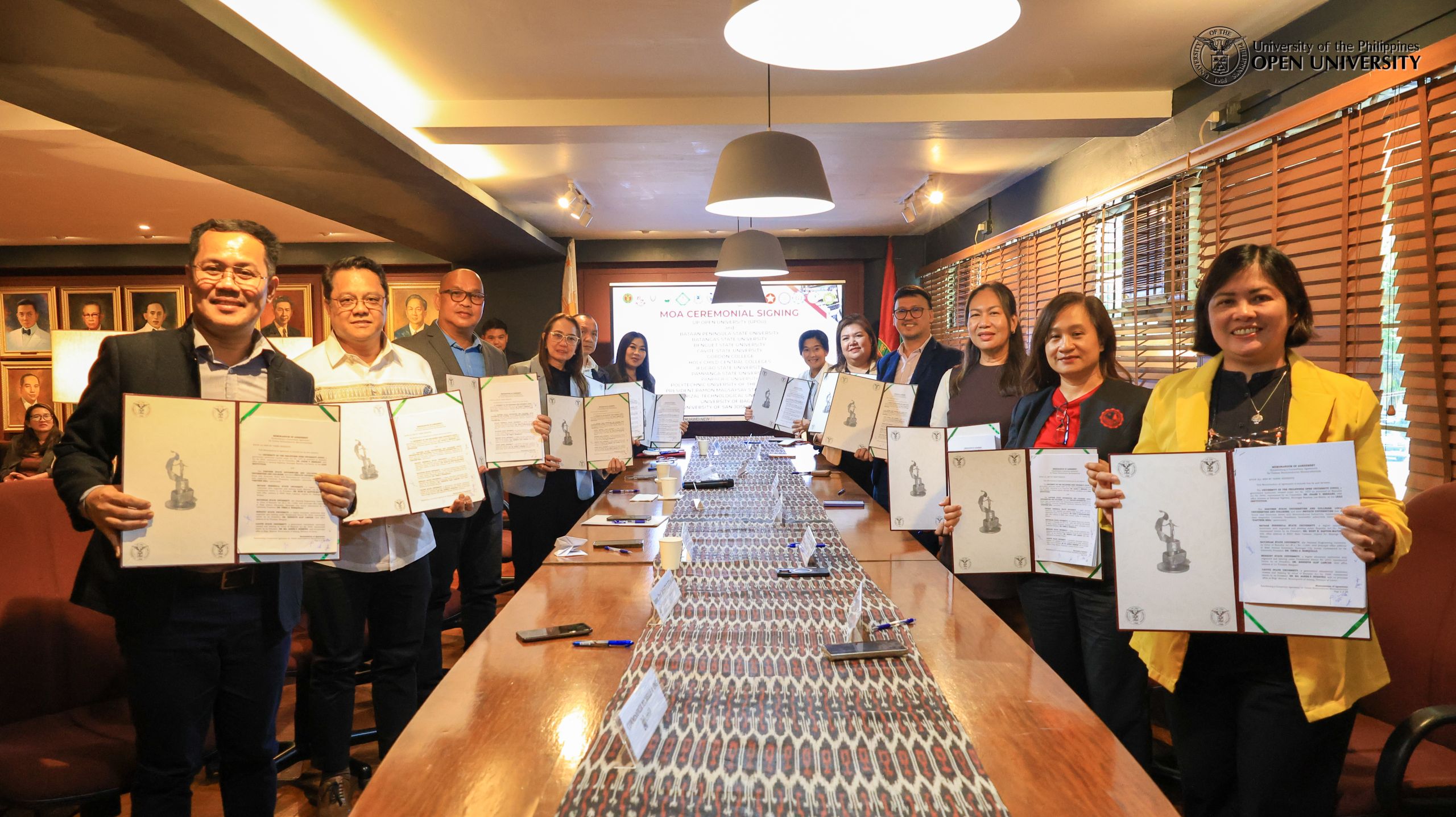
UPOU Chancellor Joane Serrano (rightmost) with the representatives from partner institutions after the MOA signing ceremony.
Following the first batch of partner institutions that formally cemented the consortium partnership on 10 April 2026, the University of the Philippines Open University (UPOU) further strengthened its commitment to future-ready education and workforce development through the ceremonial signing of the second batch of partner institutions for the Microcredentials on Semiconductor Program. The signing ceremony was held on 12 May 2026 at Ang Bahay ng Alumni, UP Diliman, Quezon City.
The initiative brought together 15 higher education institutions across the country in a shared effort to equip Filipino learners with specialized and industry-aligned competencies in semiconductor technology through flexible online learning.
Joining UPOU in the partnership are Bataan Peninsula State University, Batangas State University, Benguet State University, Cavite State University, Gordon College, Holy Child Central Colleges, Ifugao State University, Pampanga State University, Panpacific University, Polytechnic University of the Philippines, President Ramon Magsaysay State University, Rizal Technological University, University of Baguio, and the University of San Jose-Recoletos.
The Memorandum of Agreement (MOA) aims to capacitate students through microcredential courses focused on semiconductor design, manufacturing, testing, and advanced electronic systems. The partnership also seeks to identify and recommend high-performing students for further training opportunities with Taiwanese semiconductor companies.
Leading the ceremonial signing was UPOU Chancellor, Dr. Joane V. Serrano, together with university presidents, academic leaders, and representatives from participating institutions. The event was graced by Commission on Higher Education (CHED) Commissioner Michelle Ong, who recognized the growing relevance of the semiconductor industry and the importance of preparing Filipino learners for emerging global opportunities.
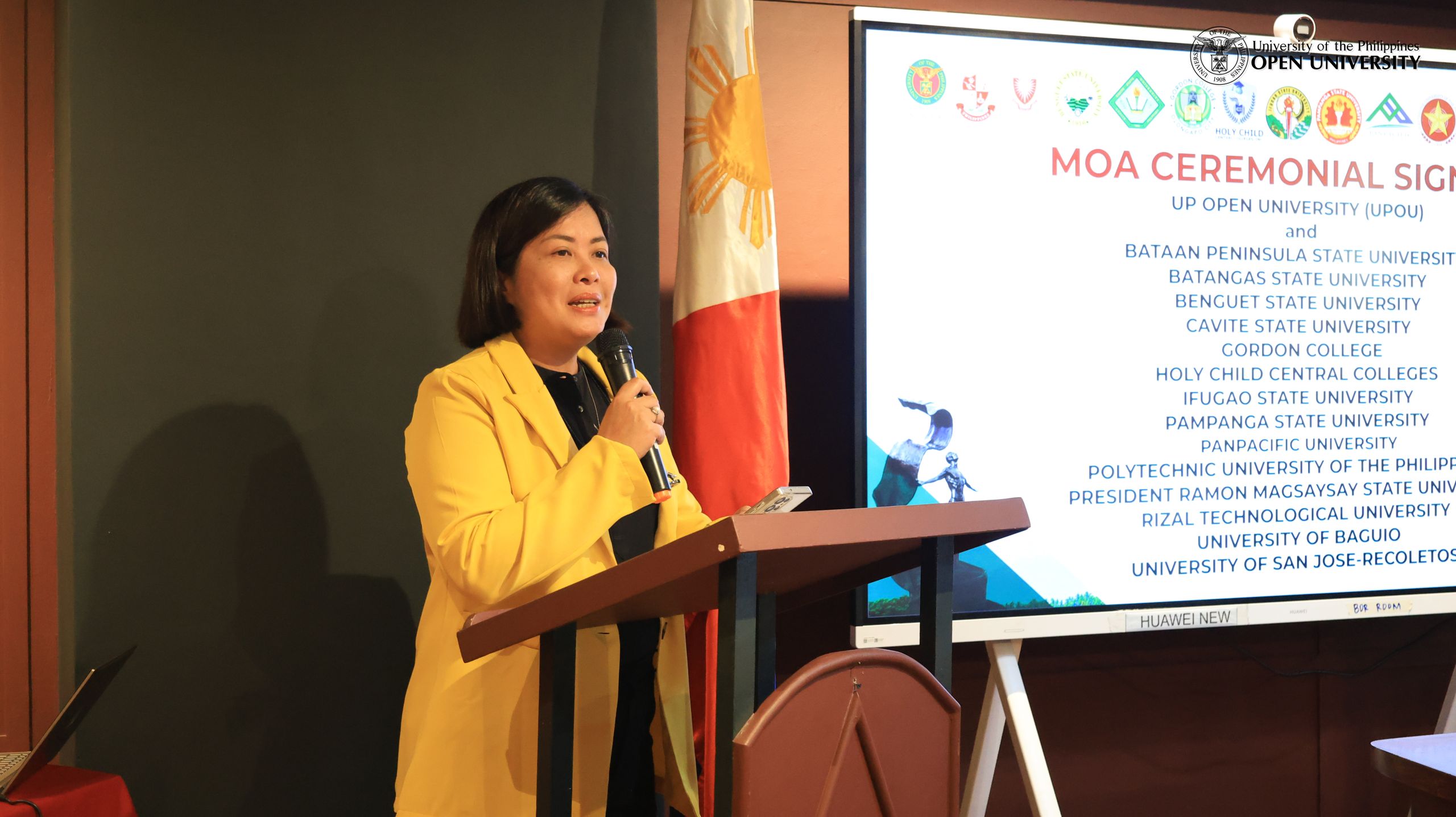
Chancellor Joane Serrano delivering her remarks.
In her remarks, Chancellor Serrano emphasized that the partnership represents more than an academic collaboration. She described the initiative as a collective effort to prepare Filipino workers and students for the country’s semiconductor ecosystem, while stregthening existing academic programs within participating institutions. The consortium creates opportunities for institutions to learn from one another, share resources, and build pathways for research, innovation, and industry engagement.
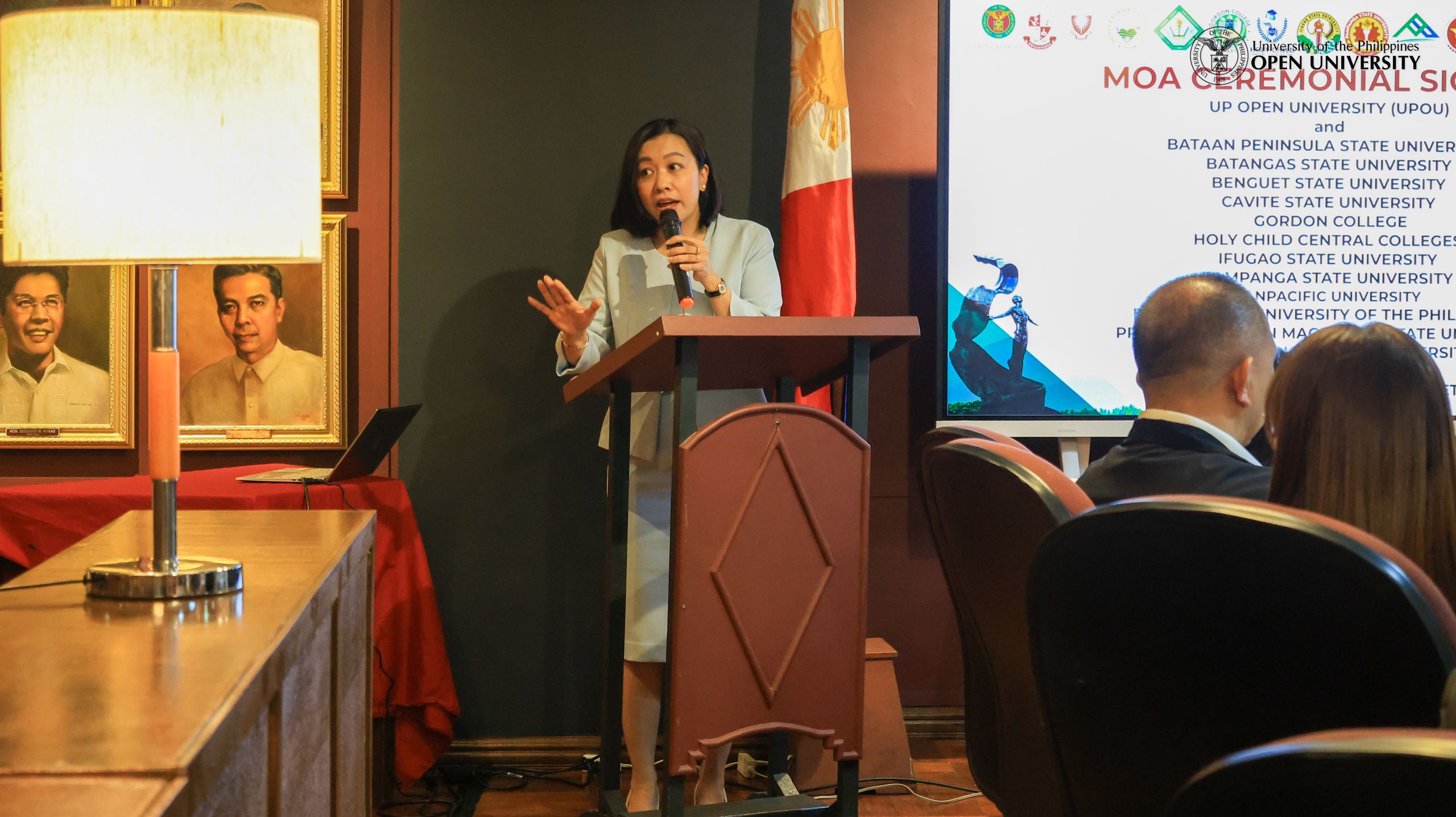
CHEd Commissioner Michelle Ong during her speech.
Commissioner Ong underscored the increasing importance of the semiconductor sector in everyday life and economic development. She acknowledged UPOU’s pioneering role in introducing microcredentials in the Philippines and commended the participating institutions for embracing innovative learning approaches. She noted that the Philippines is well-positioned to contribute talent and expertise to the expanding semiconductor sector in the region.
Representatives from participating institutions also expressed their commitment and support for the collaboration. Many highlighted the importance of industry-aligned education, innovation, and expanded opportunities for Filipino learners and communities.
The partnership represents an opportunity to bridge traditional academic learning with emerging industry needs. They emphasized the role of the initiative in fostering knowledge exchange and building a more resilient future for the Philippines.
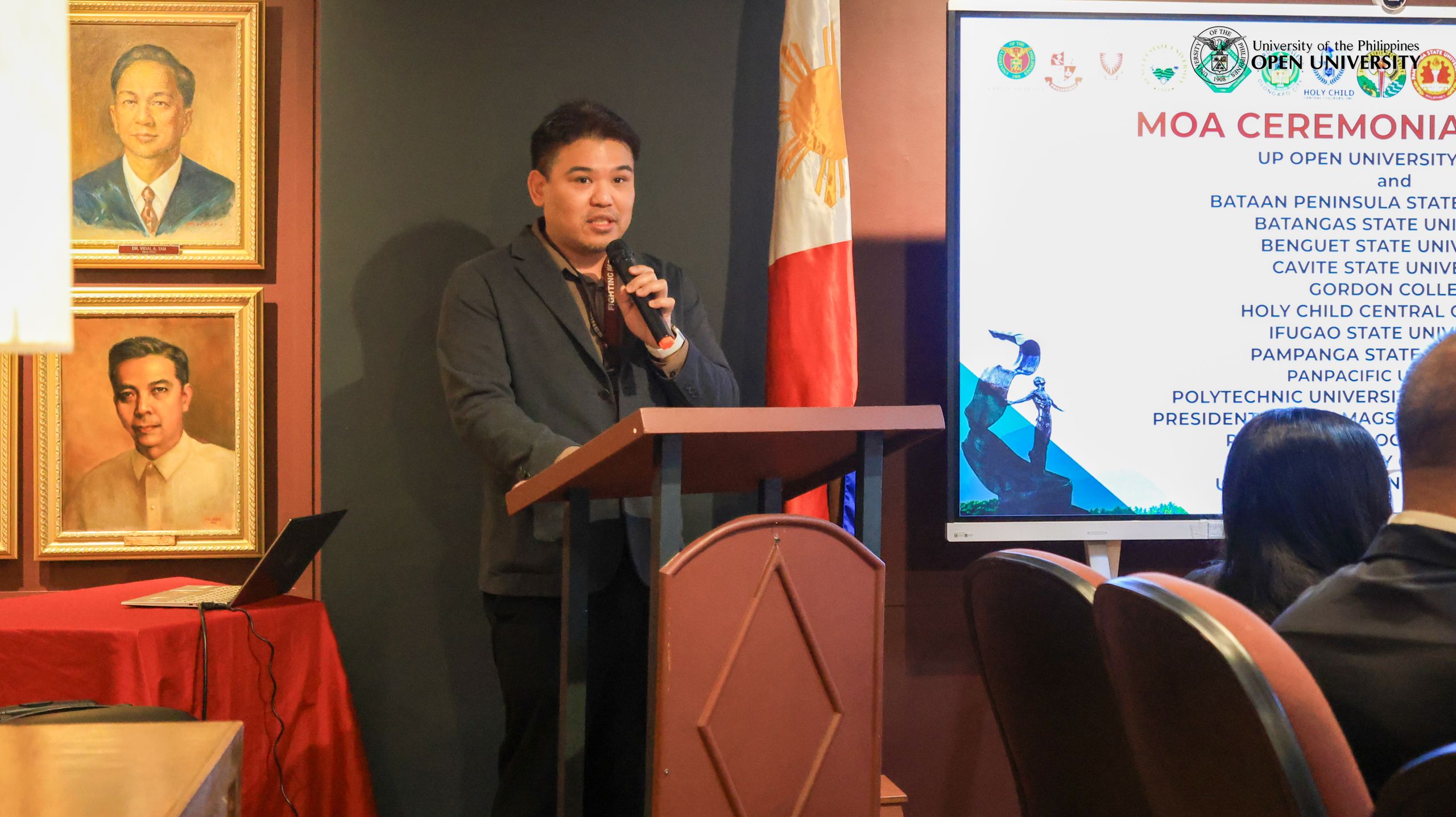
UPOU Faculty of Information and Communication Studies Dean Roberto Figueroa Jr. served as the host during the MOA signing.
The ceremonial signing concluded with the formal signing of the MOA and the presentation of tokens of gratitude to participating institutions, marking the beginning of what stakeholders described as a meaningful and transformative partnership.
Through the growing consortium, UPOU continues to advance accessible, flexible, and innovative education while helping prepare Filipino learners for the demands of a fast-evolving global workforce and strengthening the country’s role in the semiconductor industry.
Written by Marinela Hernandez | Edited by Primo Garcia and Anna Cañas-Llamas | Photo by Dianne Cosinas