In a strategic move to address the growing skills gap in the Philippines’ emerging semiconductor sector, the University of the Philippines Open University (UPOU) launched a pioneering collaboration with industry leaders and academic institutions in Taiwan through a series of high-level engagements held from 12 to 16 January 2026. This partnership aims to develop and deliver microcredential courses designed to establish a reliable, industry-ready talent pipeline for the global semiconductor sector.
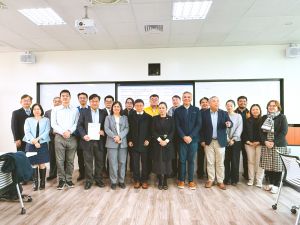
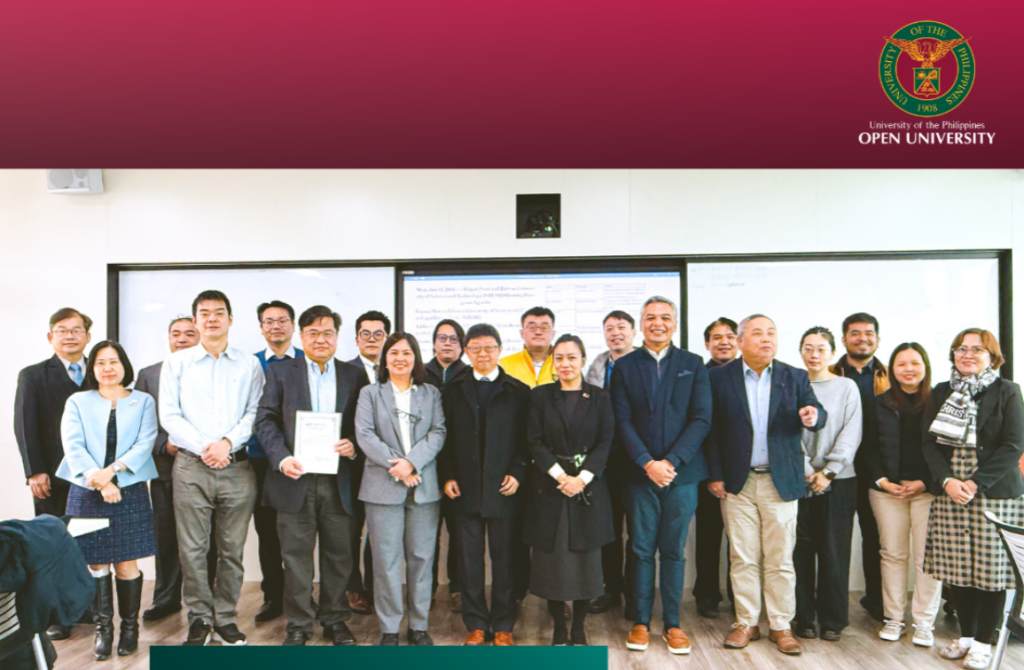
Delegates from UPOU, National Taiwan University of Science and Technology (NTUST) officials, and industry partners gather during the high-level engagement at NTUST
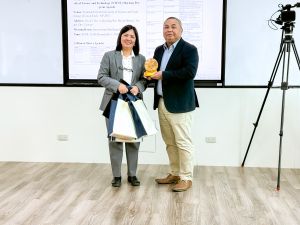
Chancellor Joane Serrano and NTUST Dean Ming-Jyh Chern exchange tokens of appreciation, symbolizing the partnership to build a global talent platform
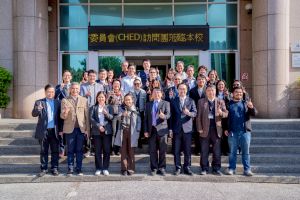
Delegates from UPOU, Minghsin University of Science and Technology (MUST) officials, and industry partners gather at MUST
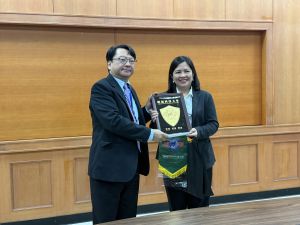
Chancellor Serrano and MUST President Ming-Feng Lu exchange tokens of appreciation
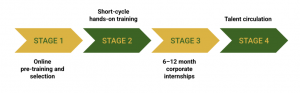
The collaboration brings together UPOU, Taiwan universities, and industry stakeholders, including National Taiwan University of Science and Technology (NTUST), Minghsin University of Science and Technology (MUST), and the Kaohsiung Medical University – International University Social Responsibility (KMU-IUSR) Program to co-design short, competency-based programs that combine online learning, hands-on training, and industry exposure. Central to the initiative is a four-stage talent development pathway that includes online pre-training and learner selection, short-cycle hands-on training, industry internships, and talent circulation to support workforce deployment and mobility.
The initiative supports the Department of Trade and Industry’s national semiconductor and electronics development agenda, which identifies human capital development as a key pillar in strengthening the country’s participation in global value chains. Manila Economic and Cultural Office (MECO) Trade Representative and Director for Commercial Affairs Anthony Rivera emphasized that as global supply chains evolve and semiconductor and advanced manufacturing activities increasingly span borders, talent development has become a critical enabler of trade, investment, and industrial competitiveness. He added, “For the Philippine Trade and Investment Center (PTIC) Taipei, this opens opportunities to explore collaboration between the Taiwanese industry, Philippine academic institutions, and relevant government partners with the objective of translating talent cooperation into investment, technology transfer, and industrial partnerships.” CHED Commissioner Michelle Ong highlighted the role of leading universities in setting national standards, noting that standardized modules can help align higher education institutions with industry-defined competencies while supporting inclusive workforce development.
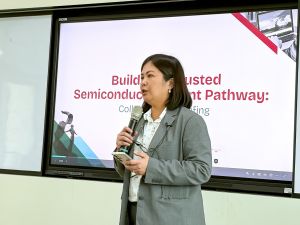
Chancellor Serrano discusses the vision for building an industry-ready talent pipeline
During the collaboration briefing, Chancellor Serrano emphasized the long-term vision of the initiative:
“No single institution can do this alone… The long-term vision is to build a global talent platform for semiconductor companies, starting with the Philippines, expanding through Taiwan, and ultimately serving the global industry. Together, we are building a system that works now and can grow sustainably.”
The collaboration responds to shared workforce needs in both the Philippines and Taiwan, addressing talent shortages while enabling cross-border cooperation in training, internships, and skills deployment. By leveraging UPOU’s open and distance learning expertise and Taiwan’s advanced semiconductor ecosystem, the initiative aims to support national development goals in the Philippines while contributing to Taiwan’s demand for a globally competitive, industry-ready semiconductor workforce.
Key milestones include the official program launch and the start of course offerings on 6 May 2026, in Taiwan. Universities and industry partners interested in consortium membership or in enrolling learners in the upcoming cohort are invited to coordinate with UPOU through [email protected].
Written by Jessa Perez| Edited by Joane Serrano and Roberto Figueroa Jr.