

Anything can be an instrument to affect change. For students, a single pen stroke can go as far as the revolution of a country. For a woman, a drop of milk could be the channel of nourishment to a whole nation. For a team of researchers from the University of the Philippines Open University (UPOU), however, the earth itself has become a powerful armor for empowering communities and advancing more inclusive, sustainable farming on land and at sea.
The project began with a response to a call for gender-focused research. A small group of UPOU researchers saw the chance to document something that had long remained overlooked: the contributions of women leading permaculture initiatives across the Philippines.
For many, permaculture is often dismissed as a niche practice or a hobby for the privileged. But for Dr. Finaflor F. Taylan, Dean of the UPOU Faculty of Management and Development Studies (FMDS) and the project’s lead researcher, it represents something far more significant—a practical approach that helps communities become more resilient in the face of climate change, food insecurity, and disasters.
The team also recognized a gap in Philippine research. Despite the growing number of permaculture practitioners, little documentation existed on its long-term impacts and on the women quietly leading these efforts. Their goal was not only to generate evidence on the effectiveness of permaculture but also to amplify the stories of women who have long been restoring ecosystems and strengthening their communities.
Dr. Taylan describes research at UPOU as guided by a philosophy where teaching, research, and public service are interconnected. This project reflects that principle by ensuring that research does not end with publications but translates into meaningful benefits for communities.
Permaculture, derived from the terms “permanent agriculture” and “permanent culture,” is a design approach that seeks to create sustainable, self-sustaining ecosystems where people and nature thrive together. Through the funding of the Department of Science and Technology–Philippine Council for Agriculture, Aquatic and Natural Resources Research and Development (DOST-PCAARRD), this study, titled “Participatory Approach in Assessing and Promoting Women-Led Permaculture in Selected Permaculture Sites in the ANR Sectors in the Philippines,” is made possible.
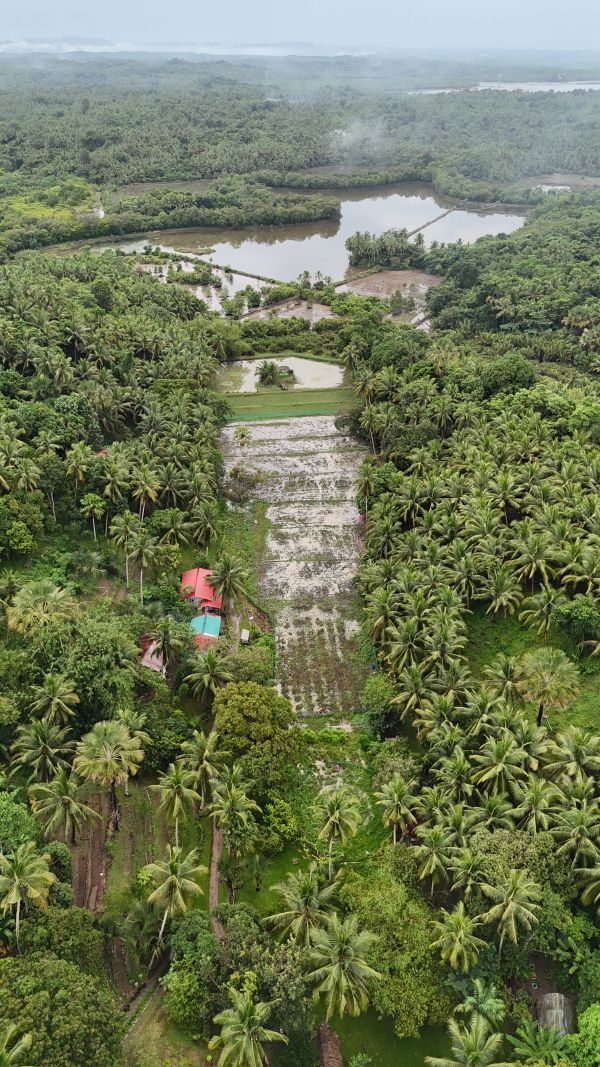
Aerial shot of the Glinoga Integrated Farm in Pitogo, Quezon. (Photo by Joshua Jabez Flores)
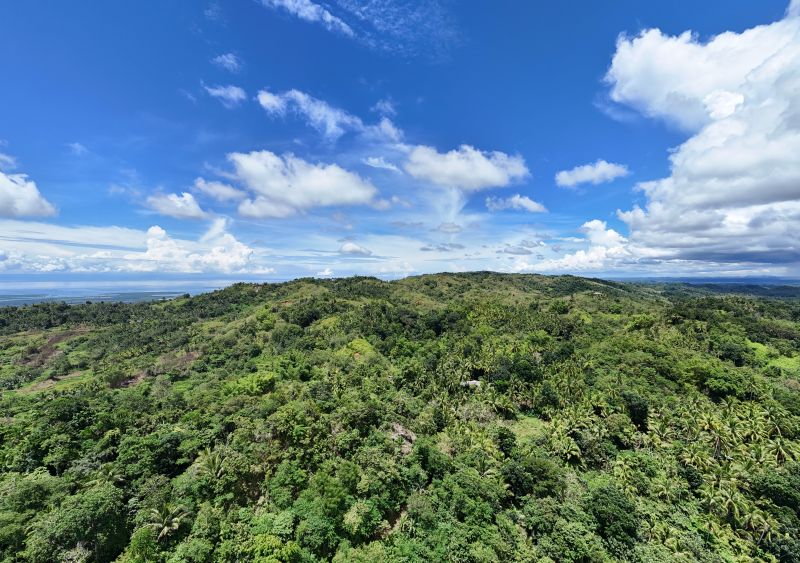
Canopy of trees of the Atbang Farm Food Forest in Calape, Bohol. (Photo by Joshua Jabez Flores)
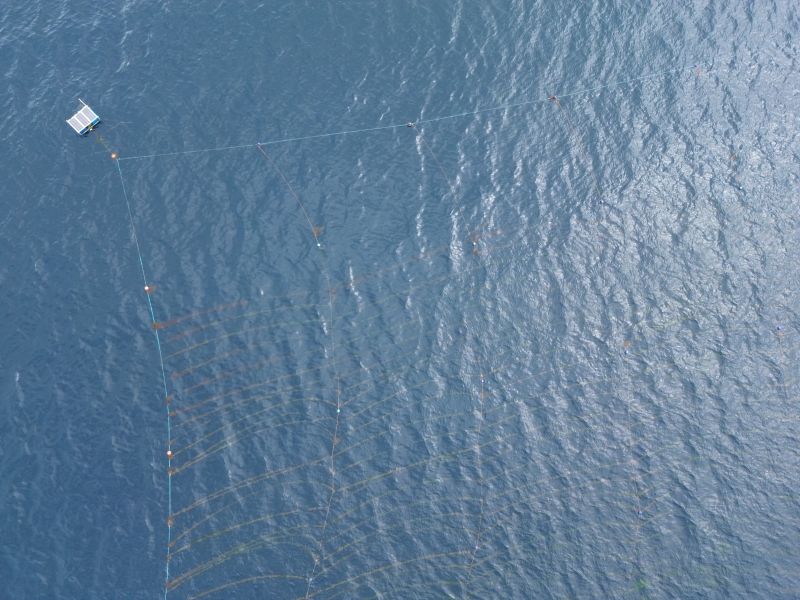
Seaweed farm of the Climate Foundation’s pioneering aquatic permaculture site in Compostela, Cebu. (Photo by Joshua Jabez Flores)
To capture the diversity of Philippine landscapes, the researchers worked across three distinct sites: Glinoga Integrated Farm in Pitogo, Quezon; Atbang Farm Food Forest in Calape, Bohol; and the Climate Foundation’s pioneering aquatic permaculture site in Compostela, Cebu. Together, these sites showcase how permaculture can be adapted to agriculture, forest ecosystems, and even marine environments. In Bohol and Cebu, communities continue to live with the effects of the 2013 Bohol earthquake and Typhoon Odette. There, permaculture has become more than a farming method, it has become part of rebuilding livelihoods by restoring degraded landscapes and strengthening resilience against future disasters.
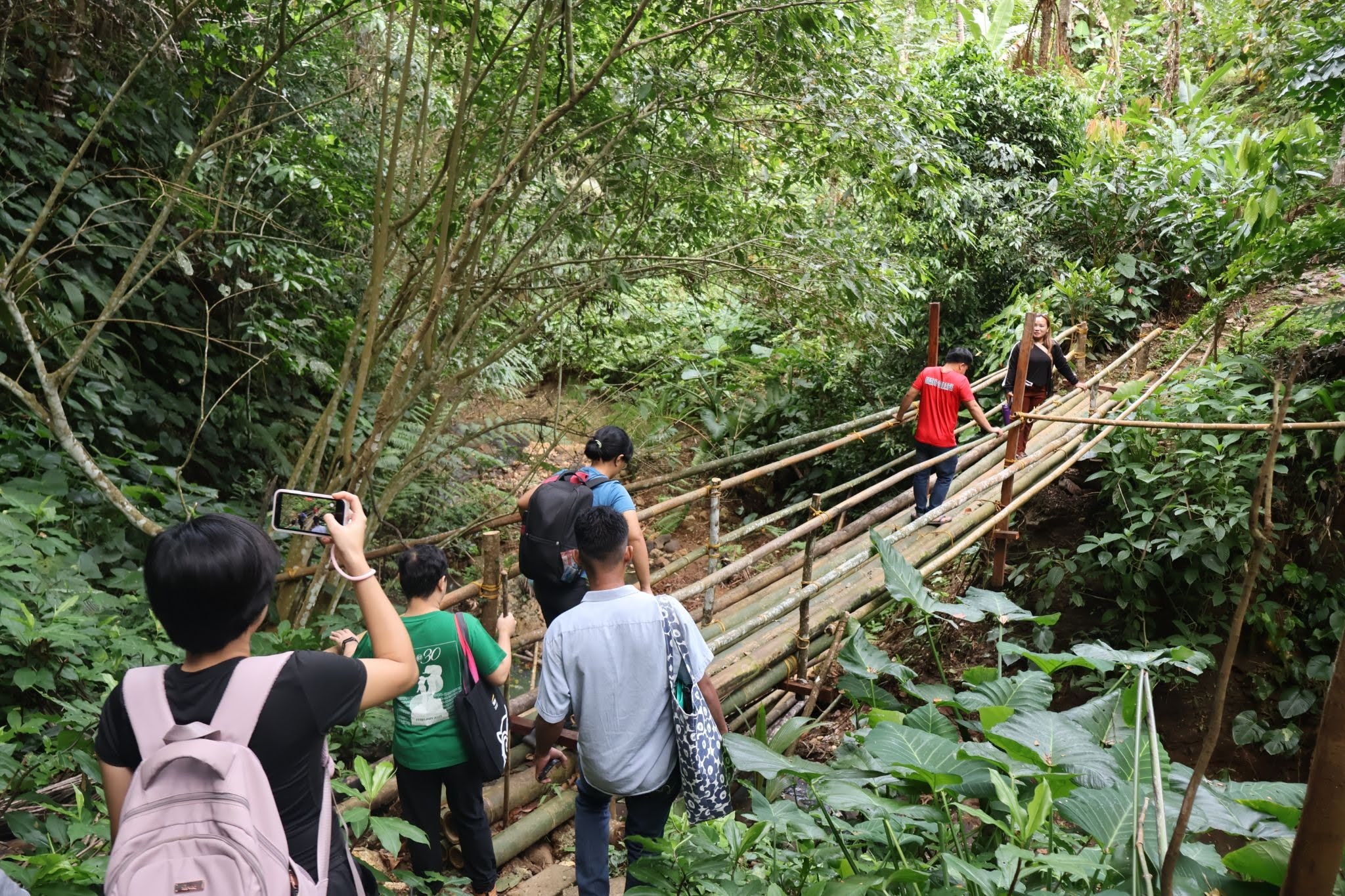
The research team crossed a bridge made of bamboo in Calape, Bohol.
For the research team, the work has been as transformative as the findings themselves. Research assistants Raizza Alforja and John Albert Casim recall the long hikes through mountains, boat rides to remote islands, and countless hours spent documenting communities in places rarely reached by conventional research.
Looking back, Raizza laughed at the scale of their original ambition. “Actually, parang sumobra pala tayo ng pangarap noong ginagawa namin ‘yung proposal.” (“It seems we dreamed a little too big when we were writing the proposal.”)
Yet those ambitious goals allowed the team to document farming systems that challenge conventional, chemical-intensive agriculture while demonstrating that sustainable food production can also be community-driven and inclusive.
The researchers also witnessed how permaculture provides a measure of food security during difficult times. Dr. Taylan recalls how the Glinoga Integrated Farm community relied on its harvests during the COVID-19 pandemic, illustrating how resilient food systems can support communities during crises.
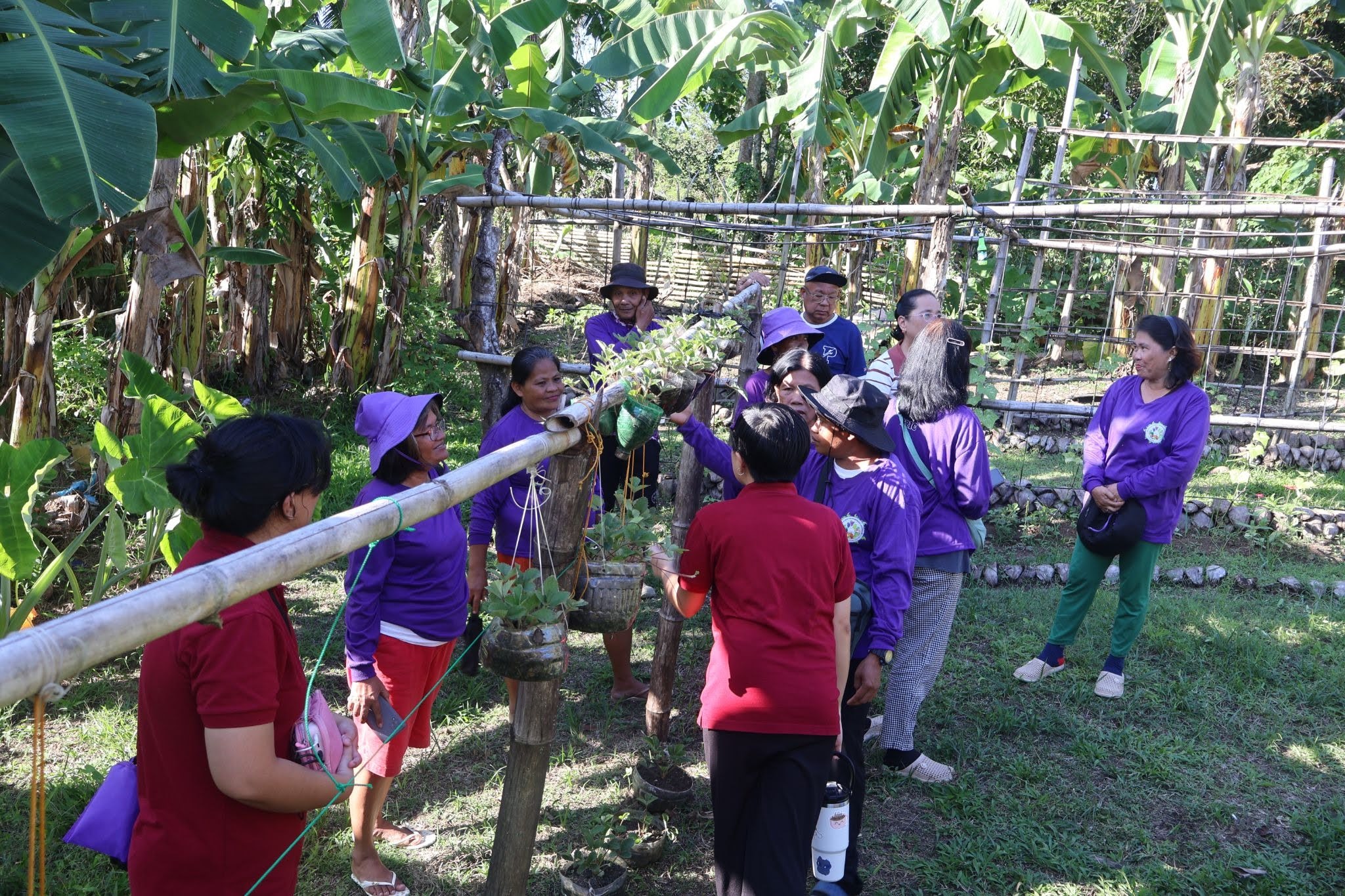
Conversing with the Fruits and Vegetable Growers Association in Brgy. Nag-Cruz, Pitogo, Quezon.
At the center of the project are the women who manage these farms.
According to Dr. Taylan, these women do not separate leadership from caregiving. The same skills they use to nurture their families shape the way they manage farms, support neighbors, and guide their communities through disasters.
“Women perform major roles as managers and nurturers in the farm. They actually liken their role as managers to the roles they play within their own families,” she said.
Their resilience is equally remarkable. For Dr. Taylan, this resilience is precisely why women have become effective leaders in building climate-resilient communities.
The project also demonstrates how UPOU views research as an extension of public service. Dr. Taylan explains. “It’s not only about agriculture, but also about food security and climate resilience. It’s a huge contribution to strengthening climate resilience and community resilience.”
The work is far from easy. Reaching many of the study sites requires hours of travel by land and sea, often followed by difficult hikes into remote communities. Yet for the researchers, the physical demands are outweighed by the opportunity to learn from women whose work often goes unnoticed.
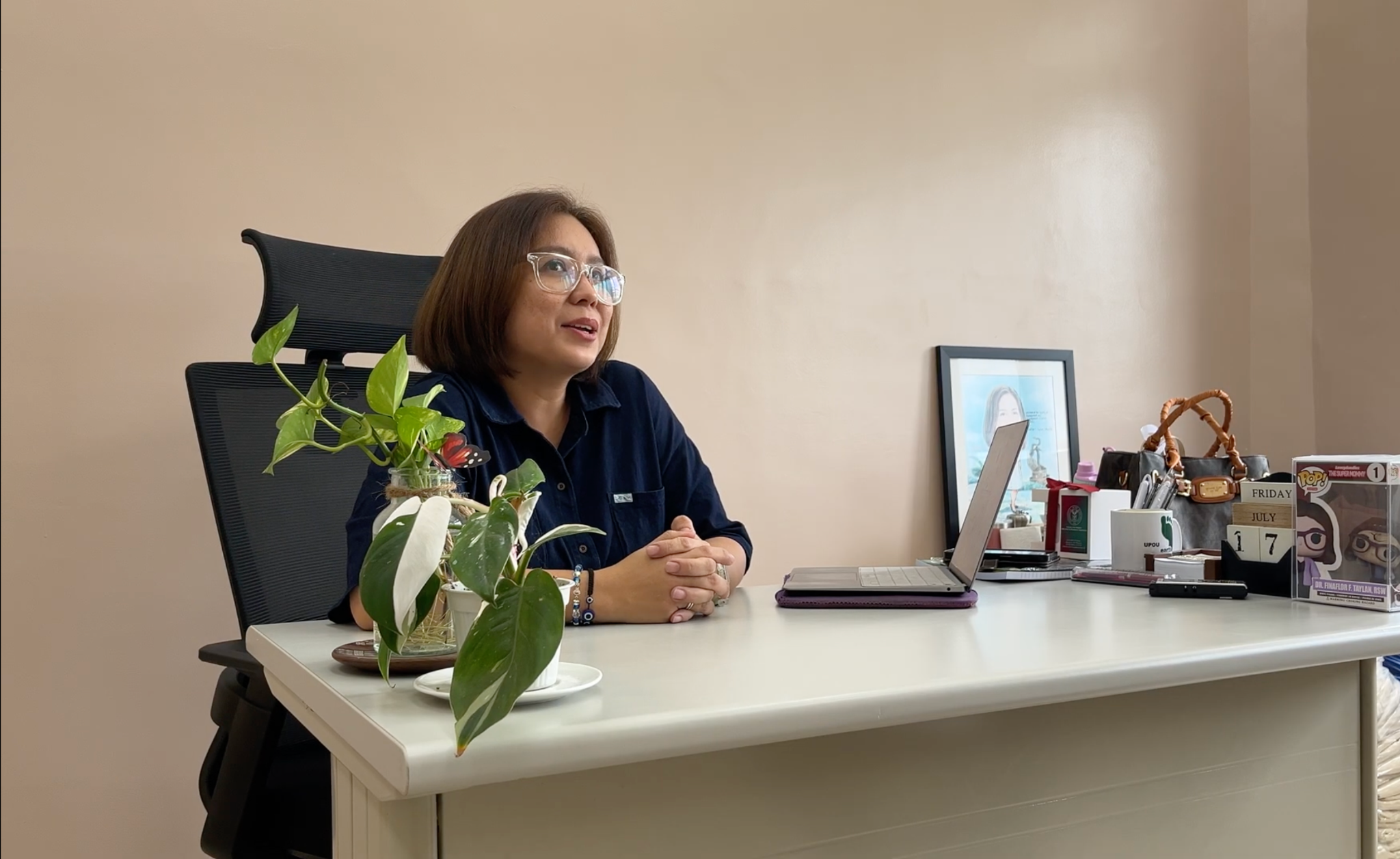
Dean Taylan during an interview with UPOU Office of Public Affairs.
“We look so tired, but at the end of the day, we are so happy and fulfilled… hoping to push further women empowerment through permaculture,” Dr. Taylan shares.
As the permaculture movement continues to grow in the Philippines, scientific documentation becomes increasingly important in validating and sharing practices that communities have refined over decades. Through this project, UPOU is helping build that body of evidence while making the experiences of women farmers and environmental stewards more visible.
Ultimately, the project is about more than farming. It is about recognizing that climate resilience begins with empowered communities, that sustainable food systems are built through collaboration with nature, and that the women nurturing these landscapes are also cultivating stronger, more resilient futures.
In documenting their stories, UPOU is not simply producing research, it is affirming that caring for the earth and empowering those who care for it are inseparable. It is research in service of people, communities, and the nation’s future.
Written by Anna Cañas-Llamas | Edited by Primo Garcia | Photos by Joshua Jabez Flores, Raizza Anna Alforja