The UP Open University (UPOU), the International Council for Open and Distance Education (ICDE), and the Asian Development Bank (ADB) hosted the Knowledge Dialogue on Resilient, Inclusive, Scalable, and Sustainable Learning Systems on 25 September 2026 at the ADB Headquarters in Mandaluyong City, Metro Manila.
The dialogue aimed to foster knowledge exchange and collaboration among key stakeholders toward advancing resilient, inclusive, scalable, and sustainable learning systems in the Asia-Pacific. It also sought to generate regional insights to inform discussions leading to the 31st ICDE World Conference 2027 in Cebu, Philippines.
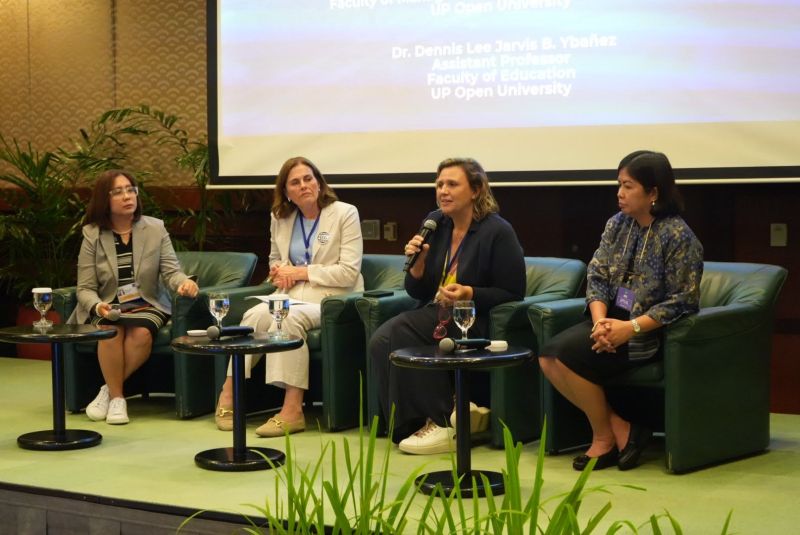
From left, Dean Finaflor F. Taylan, moderator; ICDE Secretary General Torunn Gjelsvik; ADB Principal Education Specialist Manuela Prina; and UPOU Chancellor Joane V. Serrano during the Knowledge Dialogue on Resilient, Inclusive, Scalable and Sustainable Learning Systems.
In her opening remarks, Shanti Jagannathan, Director of ADB’s Human and Social Development Sectors, emphasized the need for education systems to serve not only traditional young learners but also mid-career workers and older adults, with opportunities for both reskilling and lifelong learning.
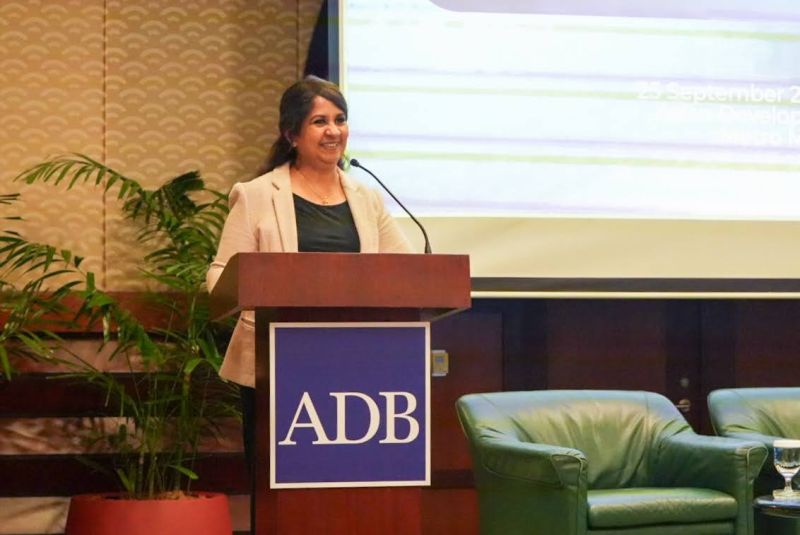
ADB Human and Social Development Sectors Director Shanti Jagannathan delivers opening remarks during the Knowledge Dialogue.
Providing a global perspective on learning systems, ICDE Secretary General Torunn Gjelsvik said sustainable education requires flexible approaches that prioritize not only scale and quality, but also inclusion and the recognition of Indigenous knowledge.
As Gjelsvik explained, “Educational inclusion is not only about who gets access to learning, it’s also about whose knowledge counts.”
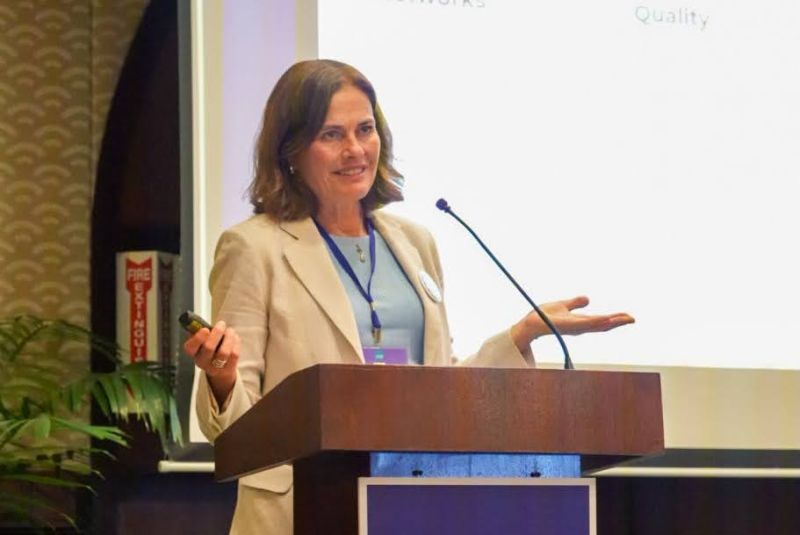
ICDE Secretary General Torunn Gjelsvik provides a global perspective on resilient and sustainable learning systems.
ADB Principal Education Specialist Manuela Prina said education and skills development in the Asia-Pacific must be treated as a connected system, integrating basic education, TVET, higher and adult education, workforce development, and flexible learning. She also underscored the growing importance of regional qualification frameworks, credential recognition and portability, and regional cooperation.
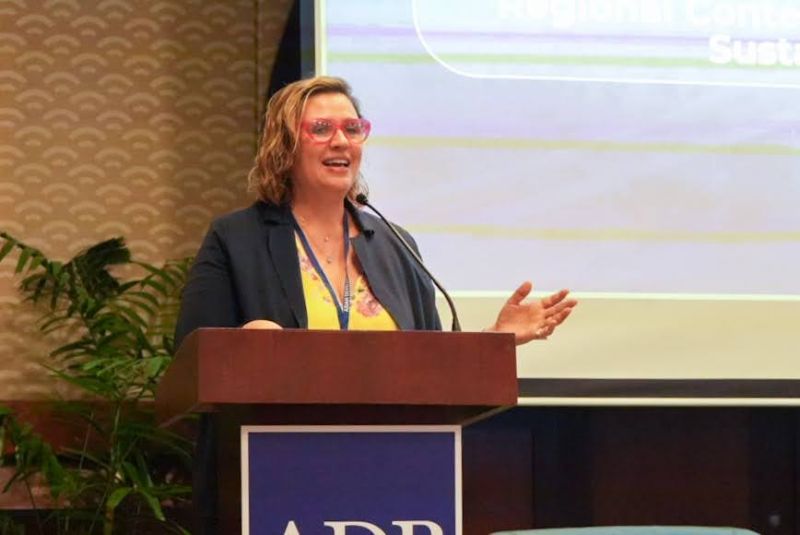
ADB Principal Education Specialist Manuela Prina discusses education and skills development in the Asia-Pacific.
In the Philippine context, UPOU Chancellor Dr. Joane V. Serrano highlighted the evolving policy ecosystem supporting lifelong learning and enabling learners to enter and re-enter education through diverse pathways. She also underscored UPOU’s mandate to provide national leadership in open and distance learning (ODL) through capacity building for the education sector.
“Our responsibility today is not simply to remain the pioneer. It is to use what we have learned over the past three decades to help strengthen the whole ODL ecosystem,” Dr. Serrano said.
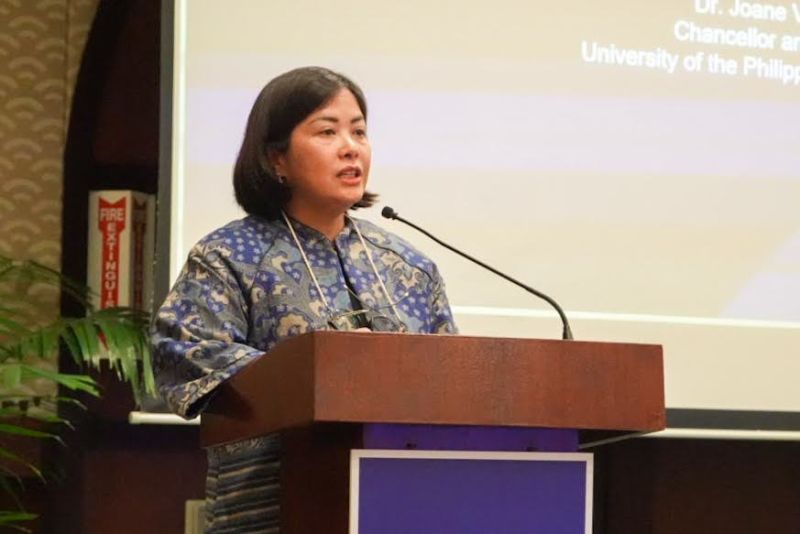
UPOU Chancellor Joane V. Serrano discusses the Philippines’ policy environment for lifelong learning and UPOU’s role in advancing open and distance learning.
Following the earlier presentations, Delphin Stephen Villafuerte, ASEC for Education and Workforce Development Group of the Department of Education, outlined the government’s “One Education” approach to connect education and workforce development, align skills with industry needs, and expand alternative pathways.
Assoc. Prof. Dr. Tawiwat Watanakuljurin, President of Sukhothai Thammathirat Open University (STOU) in Thailand, said flexible e-learning must meet diverse learners’ needs. This includes providing academic guidance, learning resources, and other support to help them complete their studies and benefit from education.
Katherine Amor A. Zarsadias, Acting Executive Director of the TESDA National Institute for Technical Education and Skills Development (NITESD), envisioned a flexible, learner-centered TVET system that recognizes existing skills, supports upskilling, and enables lifelong learning.
Prof. Dato’ Dr. Ansary Ahmed, President of Asia e-University in Malaysia, proposed regional collaboration beyond national borders, emphasizing inclusion, scale, and sustainability as three interconnected dimensions of education systems.
Dr. Rudolph Anthony A. Lacerna, Executive Director of the PUP Open University System, emphasized the need to expand access without compromising quality or sustainability through partnerships with government, industry, academe, NGOs, and other institutions.
The open forum, moderated by Dean Finaflor F. Taylan with Dr. Dennis Lee Jarvis Ybañez, focused on policy, institutional capacity, collaboration, community engagement, and diverse ways of knowing in inclusive learning.
Before the program closed, Anaïs Malbrand of ICDE invited participants to continue the dialogue through the 31st ICDE World Conference in Cebu on 15–19 November 2027 and other ICDE activities, while encouraging institutions to explore ICDE membership. In her closing remarks, Dr. Manuela Prina reaffirmed ADB’s commitment to advancing lifelong learning and continuing the dialogue across Asia and the Pacific, including at the 31st ICDE World Conference.
For more information about the 31st ICDE World Conference 2027, visit icdeworldconference2027.com.
Written by Primo Garcia with report from Dianne Cosinas | Edited by Anna Cañas-Llamas | Photos by Dianne Cosinas