
The University of the Philippines Open University (UPOU) represented the Philippines at the 29th SEAMEO Regional Open Learning Centre (SEAMOLEC) Governing Board Meeting, held on 14 to 16 September 2026 at the Grand Sahid Jaya in Jakarta, Indonesia.
The meeting brought together Governing Board members and representatives from Southeast Asian countries to discuss SEAMOLEC’s strategic directions and regional initiatives in open and distance learning (ODL), microcredentials, and the recognition of higher education qualifications.
During the Governing Board Meeting on 14 September, members reviewed SEAMOLEC’s Annual Report for 2025-2026 and discussed its strategic directions, partnerships, flagship programs, proposed three-year program priorities, and budget. The meeting also covered the Centre’s future programs and other matters requiring the Governing Board’s consideration and approval.
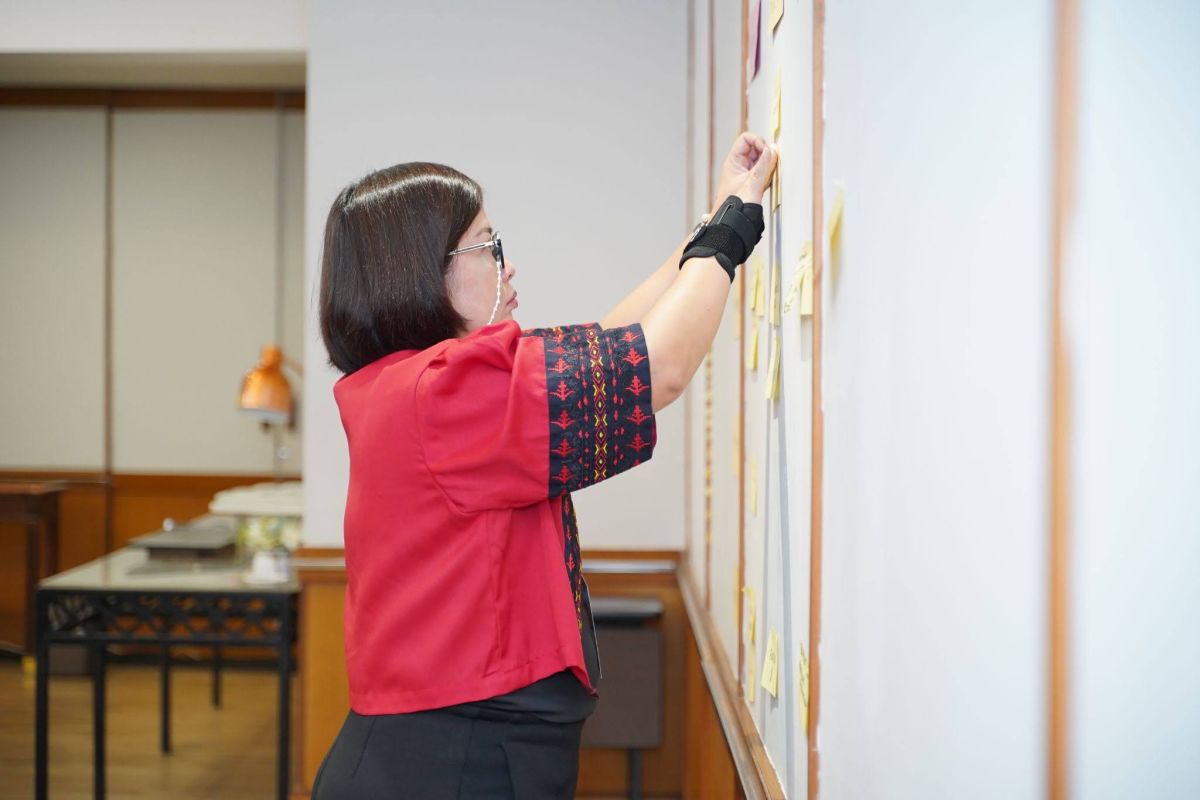
Chancellor Joane V. Serrano participates in the forum group discussion on Open and Distance Learning (ODL) Profile- Leveraging the Baseline to Enhance Education Human Resources Photo credits- SEAMOLEC
The Philippine delegation also participated in a forum group discussion on the Open and Distance Learning Profile, which explored how the Regional ODL Report could support teacher upskilling and the development of education human resources. Participants discussed ways countries could maximize their respective ODL profiles, strengthen regional cooperation, and establish a mechanism for updating the profile every two years.
Another discussion focused on progressing a regional harmonized policy on microcredentials. Participants examined key components of an emerging regional framework, including cross-border recognition, quality assurance, equity, and the integration of Recognition of Prior Learning and Accreditation of Prior Experiential Learning.
On 15 September, the Philippines took part in the Validation Workshop for the Study on the Ratification and Implementation of the Tokyo and Global Conventions on the Recognition of Higher Education Qualifications in ASEAN. The country joined Lao PDR, Myanmar, and Thailand in the third panel of country validation presentations, followed by focus group discussions on the findings of the study.
A key update raised during the Philippine validation concerned the country’s accession to the Asia-Pacific Regional Convention on the Recognition of Qualifications in Higher Education, or the Tokyo Convention. While the reports reflected that Philippines had not yet completed the accession process during their respective reporting periods, the delegation noted that the Philippine Senate concurred on the country’s accession on 7 September 2026.
Following the Senate’s concurrence, the next step is the formal deposit of the Philippines’ Instrument of Accession with UNESCO. The update clarified the status presented in the earlier reports and confirmed that the country had advanced significantly in the accession process. The status of the UNESCO Global Convention on the Recognition of Qualifications concerning Higher Education remains a separate matter from the Tokyo Convention process.
The Tokyo Convention provides a regional framework for the fair and transparent recognition of higher education qualifications across the Asia-Pacific, supporting greater academic mobility and the recognition of studies and qualifications across participating countries.
Regional discussions continued on 16 September through the seminar “Towards a Regional Framework for Micro-Credential Policies,” organized by the Indonesia Cyber Education Institute. The seminar tackled global practices in microcredential recognition, alignment with national standards and the ASEAN framework, emerging quality assurance standards, teacher upskilling, credit transfer, and the alignment of microcredentials with industry needs.
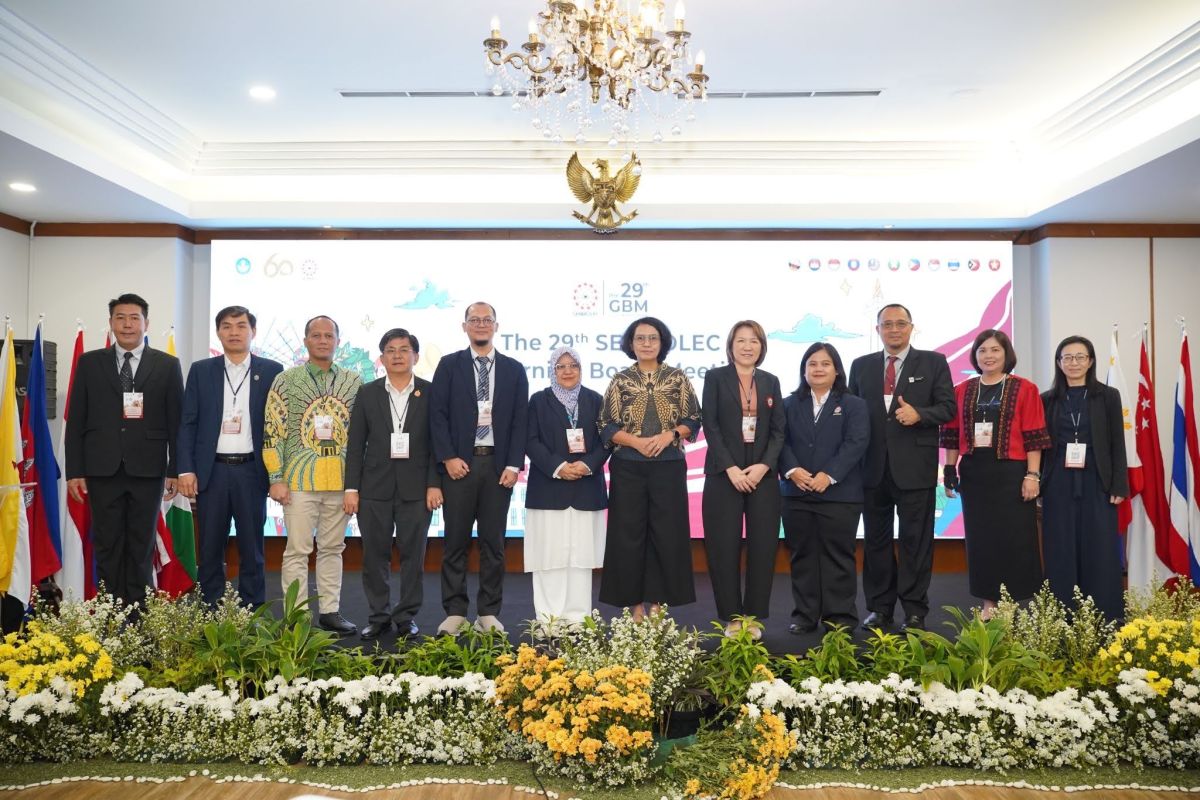
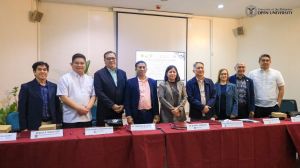
Chancellor Joane V. Serrano of the Philippines, SEAMOLEC Vice-Chairman for the 2026-2029 term, joins fellow members of the SEAMOLEC Governing Board for a group photo.
Governing Board delegations and regional partners also contributed to discussions on recommendations for a regional microcredential policy framework, particularly on quality assurance and credit transfer compatibility.
UPOU’s participation in the 29th SEAMOLEC Governing Board Meeting strengthened the Philippines’ engagement in regional discussions on open and distance learning, qualifications recognition, and microcredential development. Through the meeting and its related activities, the University contributed to collaborative efforts toward more flexible learning systems and greater mobility of learners and qualifications across Southeast Asia.
Written by Sydney Rovin Macahiya | Edited by Anna Cañas-Llamas and Primo Garcia | Photo credit: SEAMOLEC