


More than technical solutions, speakers at the International Forum on Sustainable Science (IFSS) 2026 emphasized collaboration, community participation, local knowledge, and innovation as essential to building resilient communities. Organized by the University of the Philippines Open University (UPOU) and the Pampanga State Agricultural University (PSAU), IFSS 2026 was held on 5-7 October at PSAU’s Bren Z. Guiao Memorial Multi-Purpose Center, Magalang, Pampanga, Philippines.
IFSS 2026 brought together academics, policymakers, development practitioners, business leaders, and students to discuss issues, challenges, and approaches to addressing interconnected social, economic, and environmental challenges through inclusive, collaborative, and people-centered approaches to sustainability.
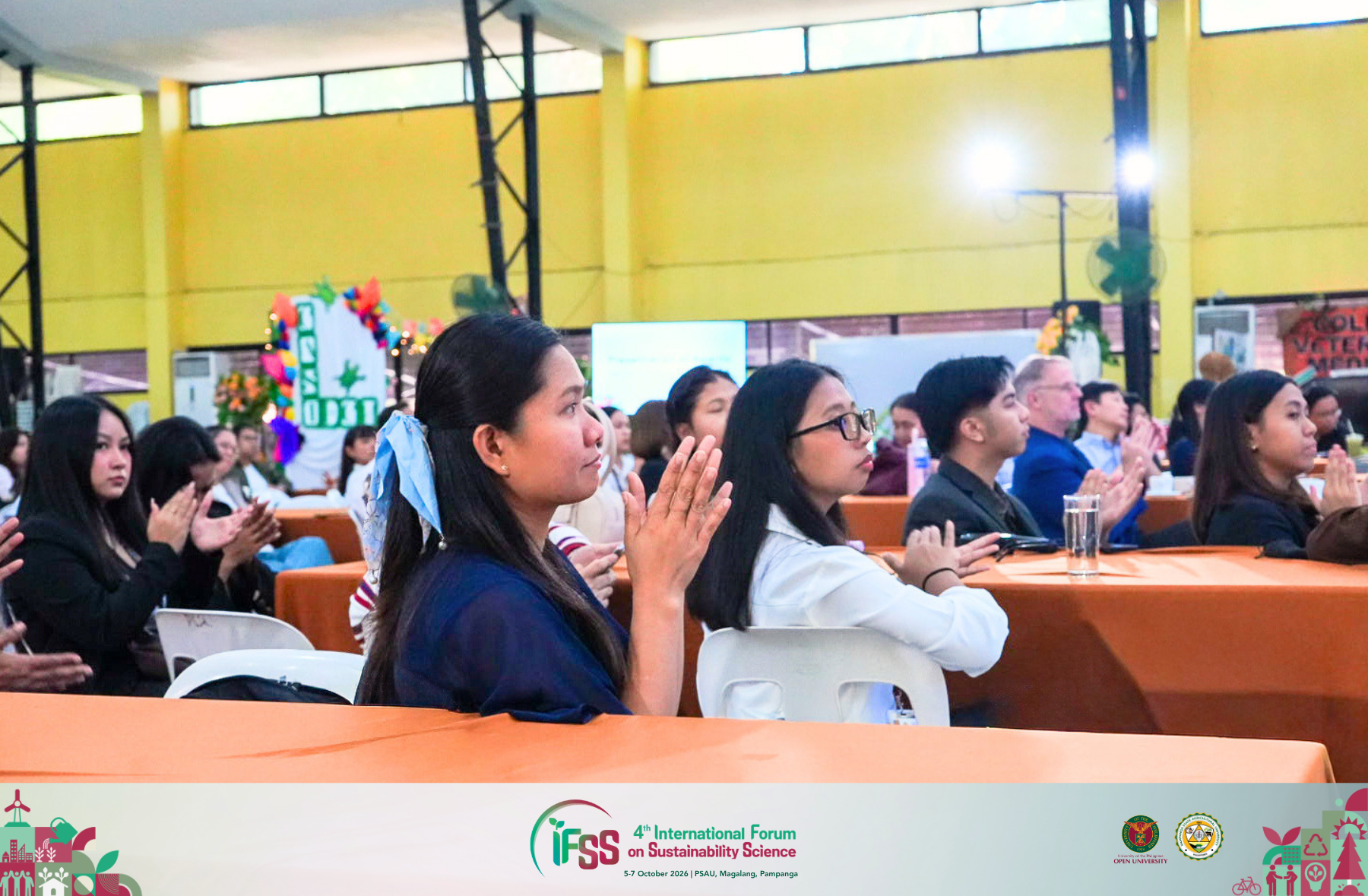
Participants attend sessions on community-centered approaches to sustainability, resilience and innovation at IFSS 2026 in Magalang, Pampanga.
In her opening remarks, Dr. Finaflor Taylan, Dean of UPOU’s Faculty of Management and Development Studies, said resilience means rebuilding and innovating, with progress grounded in justice, dignity, and shared responsibility.
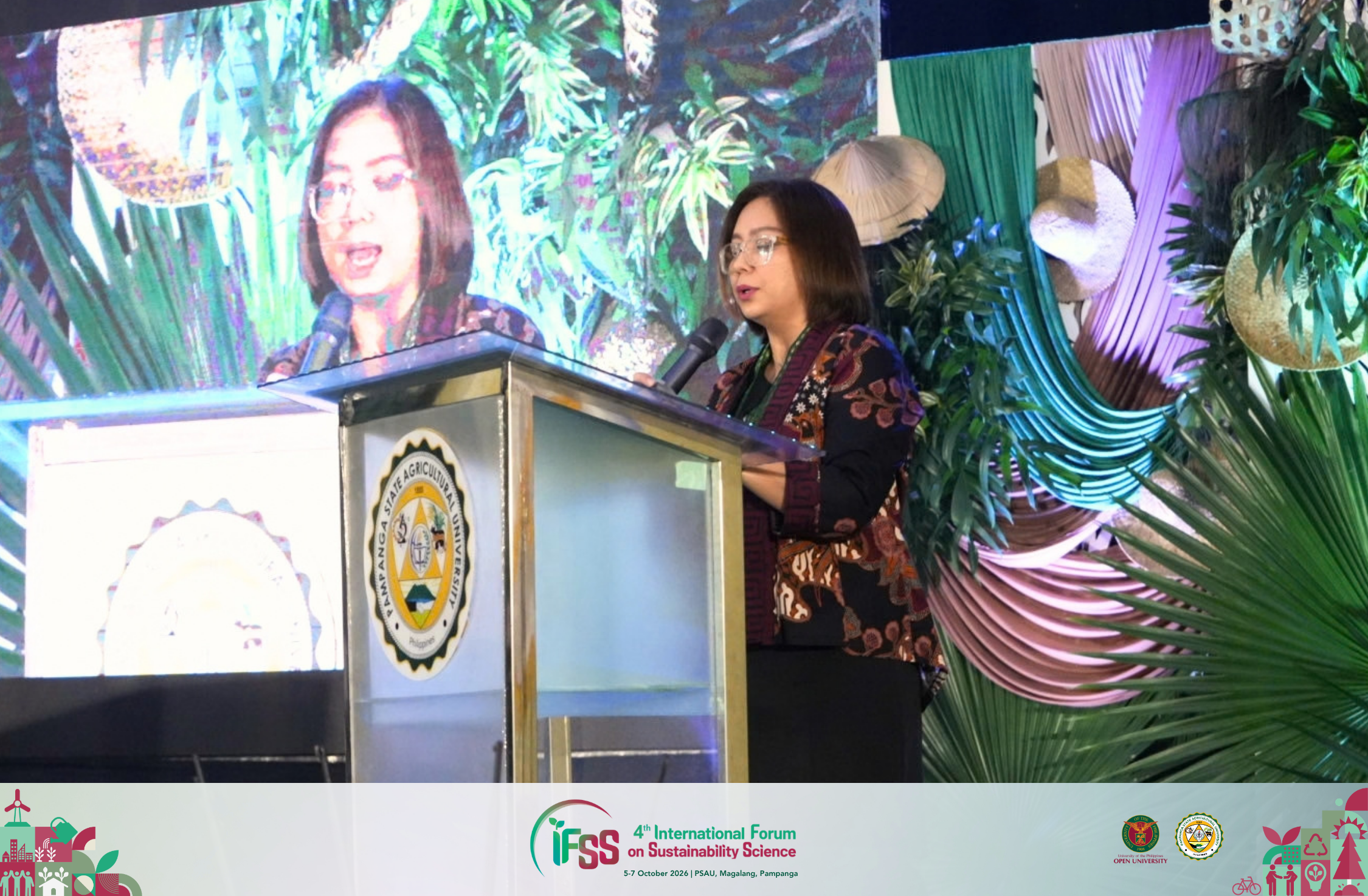
Dr. Finaflor Taylan, Dean of the UPOU Faculty of Management and Development Studies, emphasizes resilience grounded in justice, dignity and shared responsibility in her opening remarks at IFSS 2026.
Dr. Anita G. David, SUC President IV of Pampanga State Agricultural University, highlighted the role of higher education, research, and innovation in building resilient and sustainable communities through stronger partnerships and meaningful action.
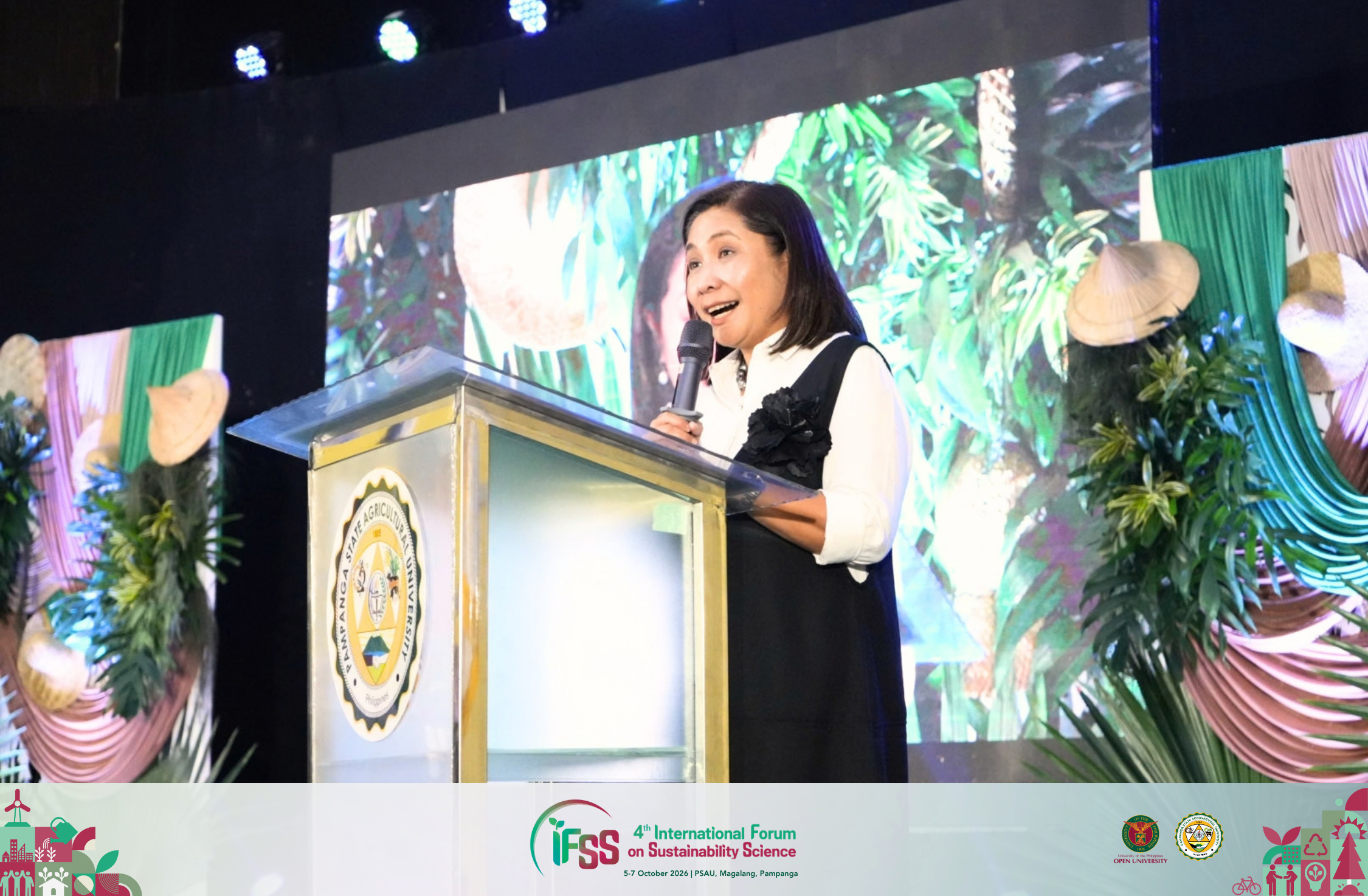
PSAU President Dr. Anita G. David highlights the role of higher education, research and innovation in building resilient communities.
UPOU Chancellor Dr. Joane V. Serrano, who formally declared the conference open, emphasized the value of bringing together diverse perspectives and expertise and called on participants to move beyond discussion toward partnerships, solutions, and concrete action.
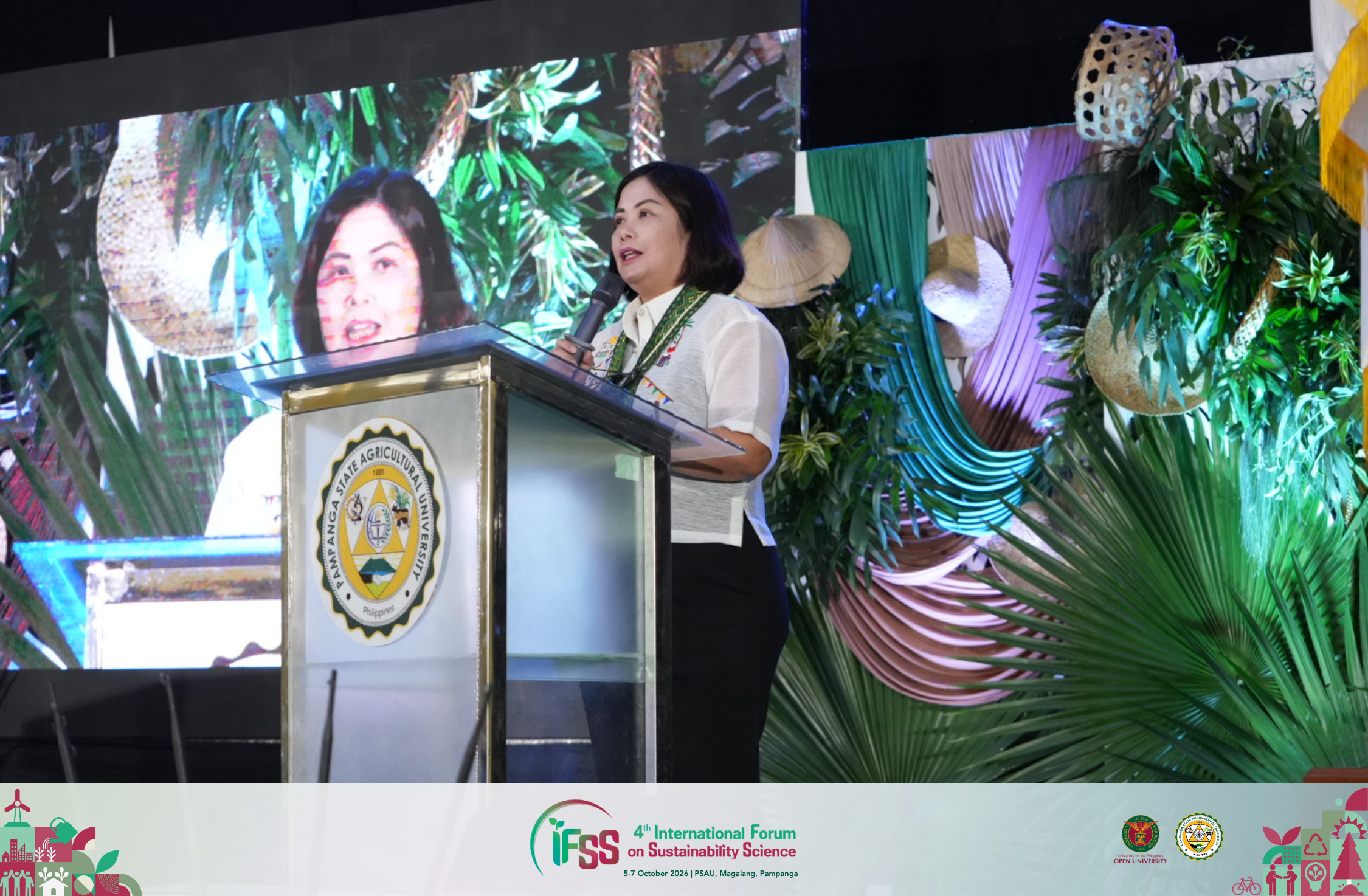
UPOU Chancellor Dr. Joane V. Serrano, calls for partnerships and concrete action toward sustainability as she formally opens IFSS 2026.
In later plenary sessions, speakers highlighted that sustainability transitions require genuine community participation with communities not only consulted but actively involved in identifying needs and challenges and developing solutions.
In her keynote, Associate Professor Kathryn S. Coleman of the University of Melbourne questioned approaches that define sustainability goals in advance and then ask communities to participate in achieving them. “Participation is not necessarily co-creation,” she said. She encouraged stakeholders to consider who defines the problems, what counts as knowledge, and what a sustainable future should look like.
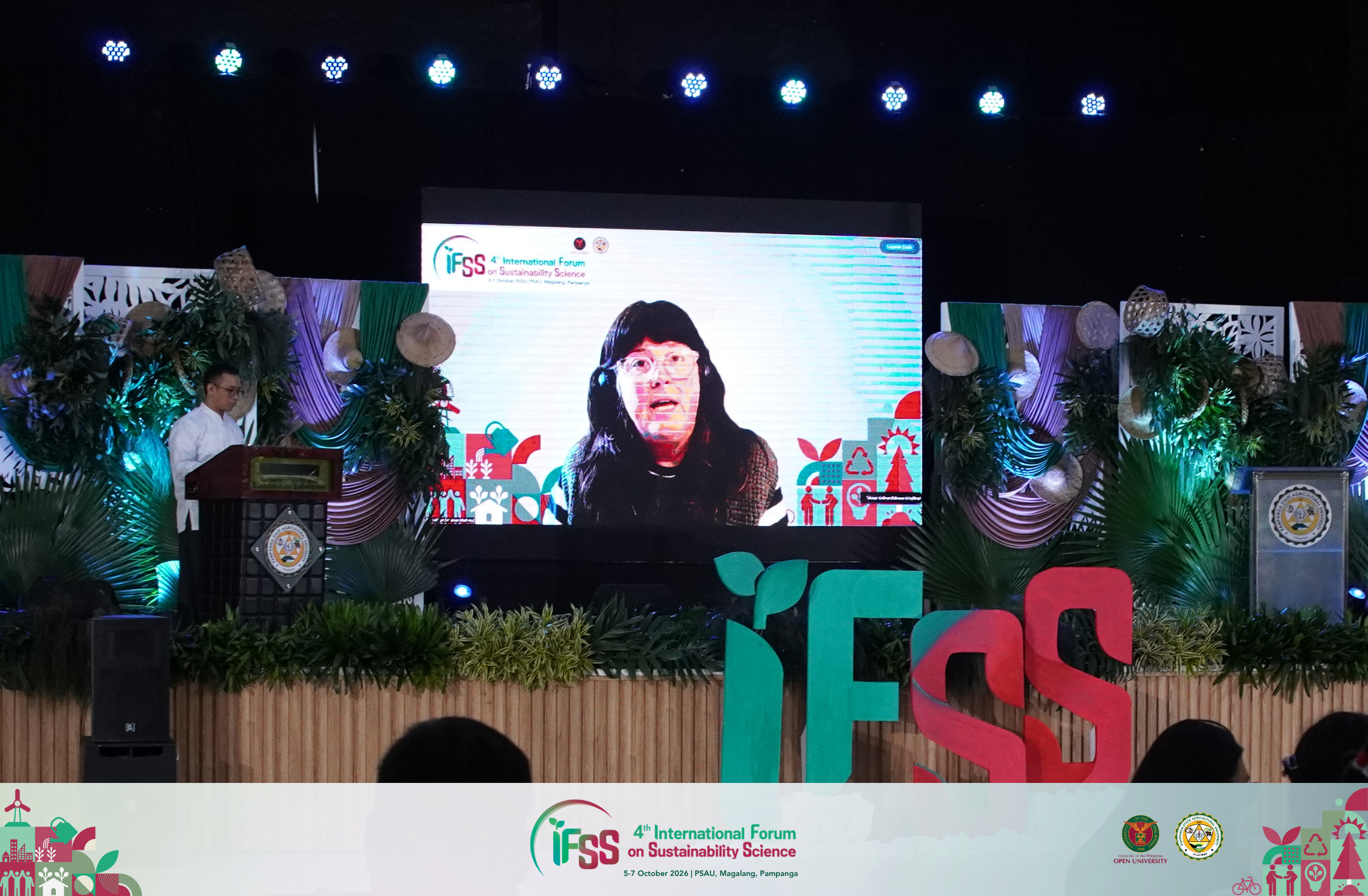
Associate Professor Kathryn S. Coleman of the University of Melbourne emphasizes genuine community participation and co-creation in sustainability initiatives during her virtual keynote.
In his presentation on the Ulleung Island Living Lab in Korea, Professor Byung-Cheol Kim of Handong Global University highlighted an asset-based approach that starts not with what communities lack but with what they already have in terms of people, knowledge, culture, institutions, and resources. Rather than providing ready-made solutions, the university works with the community to build its capacity and ownership.
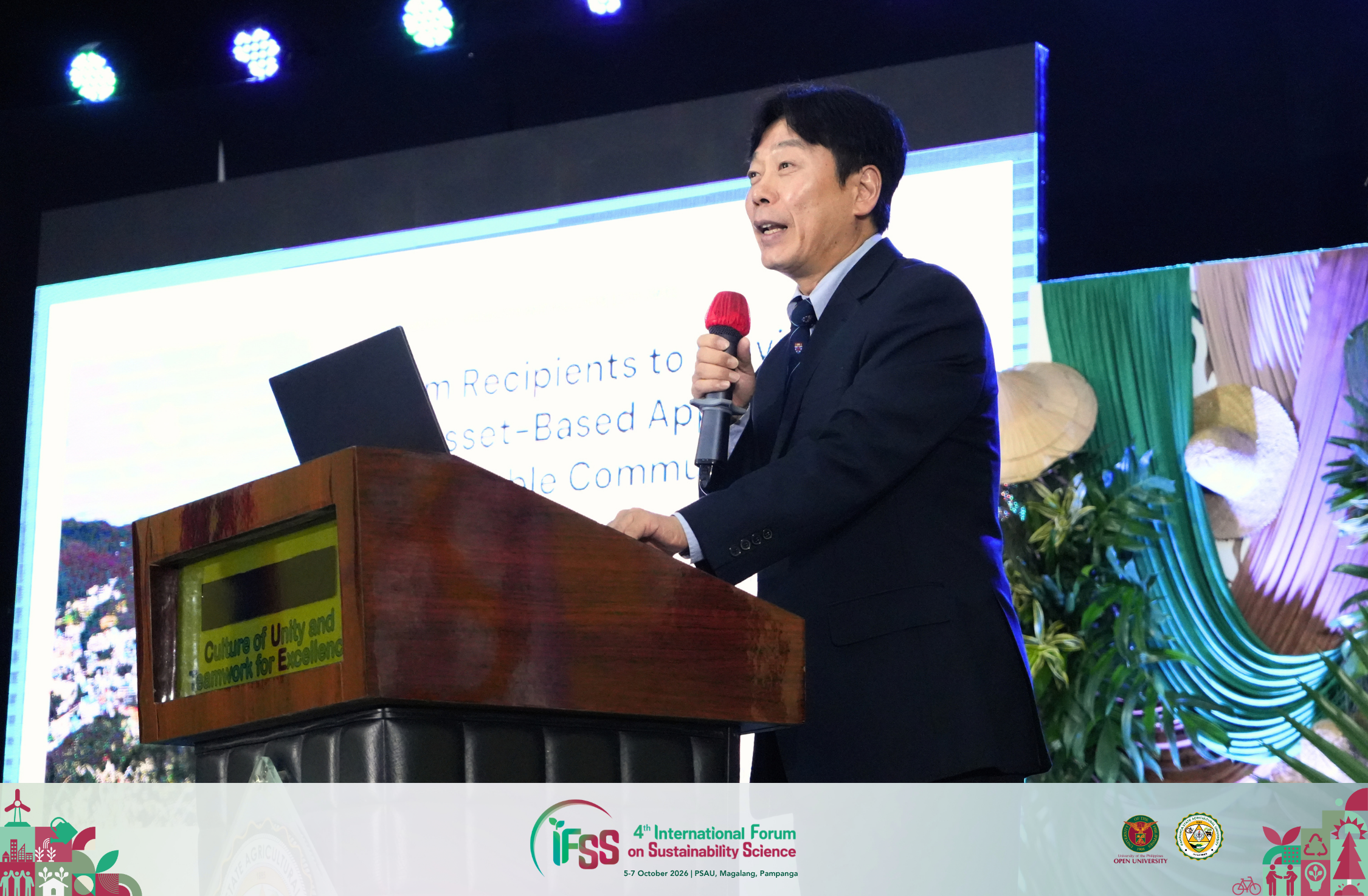
Professor Byung-Cheol Kim of Handong Global University highlights an asset-based approach to community resilience through the Ulleung Island Living Lab in South Korea.
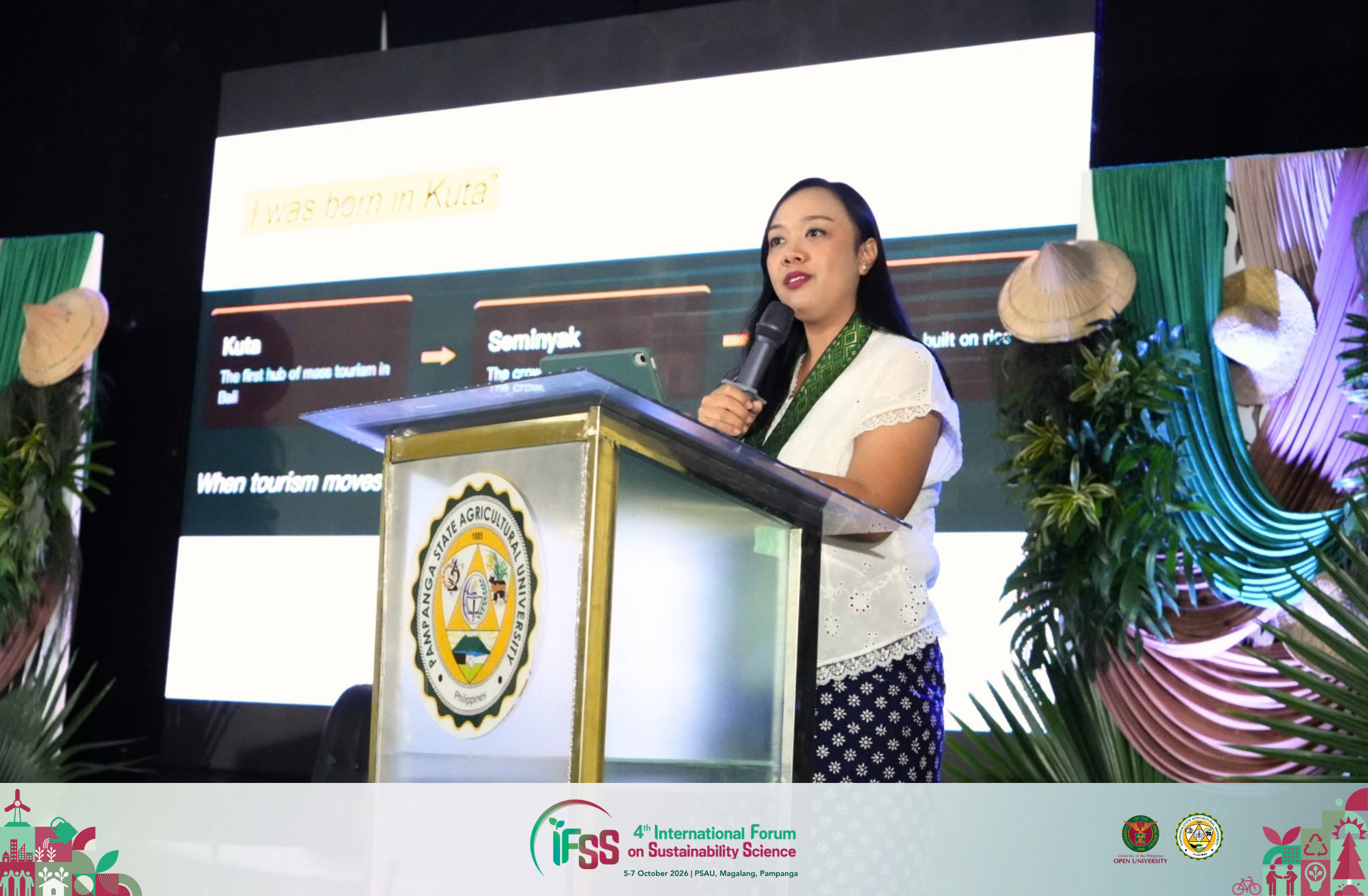
Ni Nyoman Clara Listya Dewi of Udayana University highlights the importance of community participation in building resilient tourism destinations.
Ni Nyoman Clara Listya Dewi of Udayana University similarly emphasized community participation in her presentation on tourism in Bali, Indonesia, noting that resilient destinations require local communities and cultural groups to have a meaningful role in tourism governance.
For the speakers, resilience goes beyond enduring hardships and calamities to strengthening communities’ capacity to protect their well-being. Dr. Coleman cautioned against romanticizing resilience and called for a shift from survival toward conditions that allow communities to flourish. “We need to distinguish between resilience as collective capacity and resilience as an expectation to endure.”
Building on this, Ms. Dewi highlighted that tourism resilience involves more than protecting natural resources. It also means addressing overtourism, water demand, land conversion, and unequal tourism benefits, which directly affect people’s livelihoods and well-being.
While technological innovation is key to addressing sustainability challenges, speakers also stressed that innovation is most effective when it responds to local needs and conditions and can be sustained by communities over time.
Asst. Prof. Dr. Prakash Murgeppa Bhuyar of Maejo University said biotechnology can contribute to climate-resilient agriculture and a circular bioeconomy. He highlighted the potential of biofertilizers, biopesticides, precision agriculture, and smart irrigation in addressing climate pressures such as water scarcity, soil degradation, extreme weather, and pests. He also noted how innovation can help reduce waste and respond to local conditions.
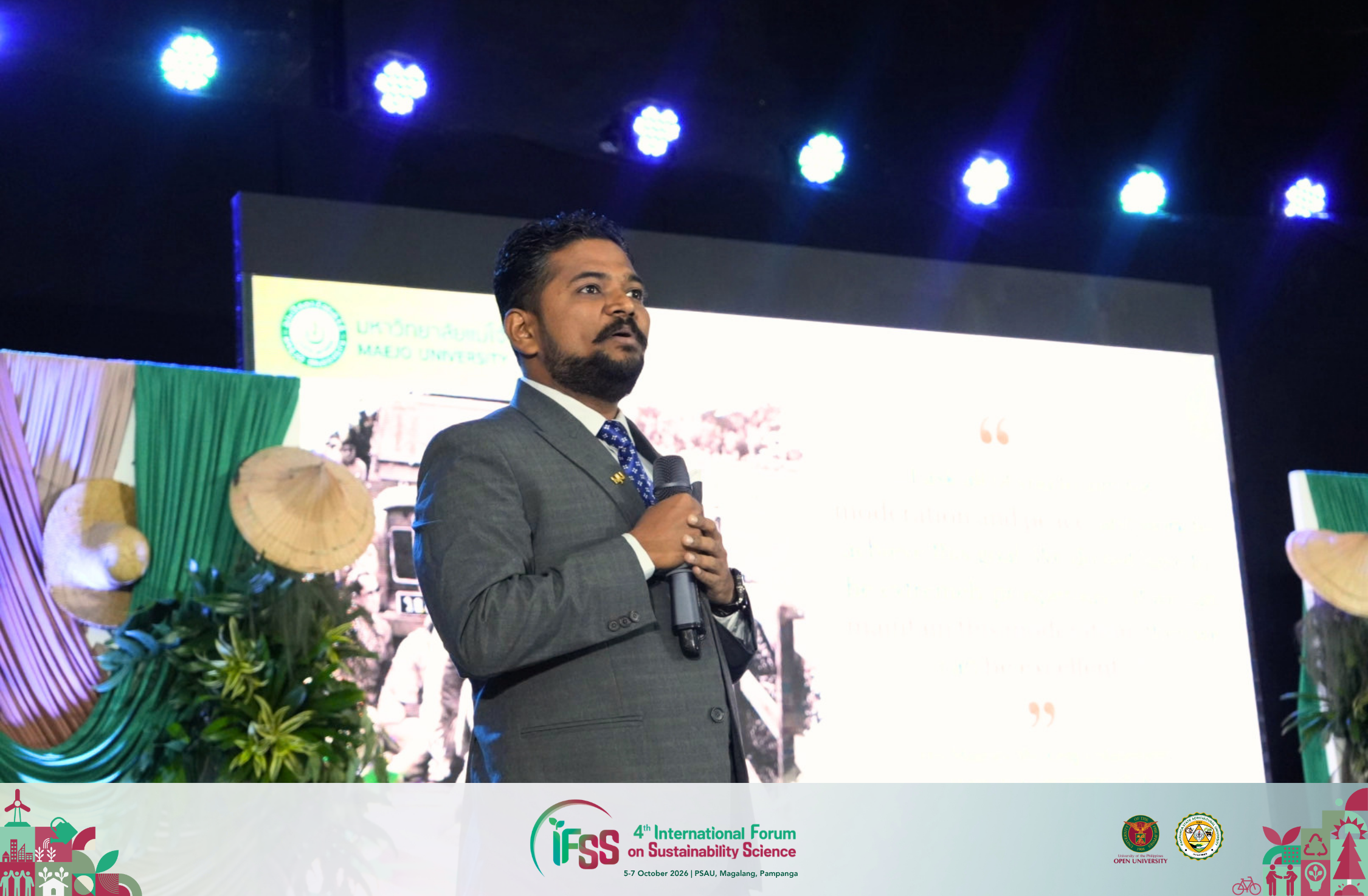
Asst. Prof. Dr. Prakash Murgeppa Bhuyar of Maejo University highlights biotechnology innovations for climate-resilient agriculture and a circular bioeconomy.
Dr. Kim also emphasized that appropriate technology does not necessarily mean simple or low-tech solutions. “Appropriate technology emerges from the community and becomes a solution that local people can understand, use, adopt, and sustain,” he explained.
Speaking about his bamboo enterprise, Rizome President and CEO Russell Smith presented engineered bamboo as a product that supports environmental restoration, livelihoods and low-carbon development. As he explained, “If we can move from a world of extraction to a world of regeneration… we can really lead the world on protecting the rights of nature, turning nature into an asset, creating value for our peoples.”
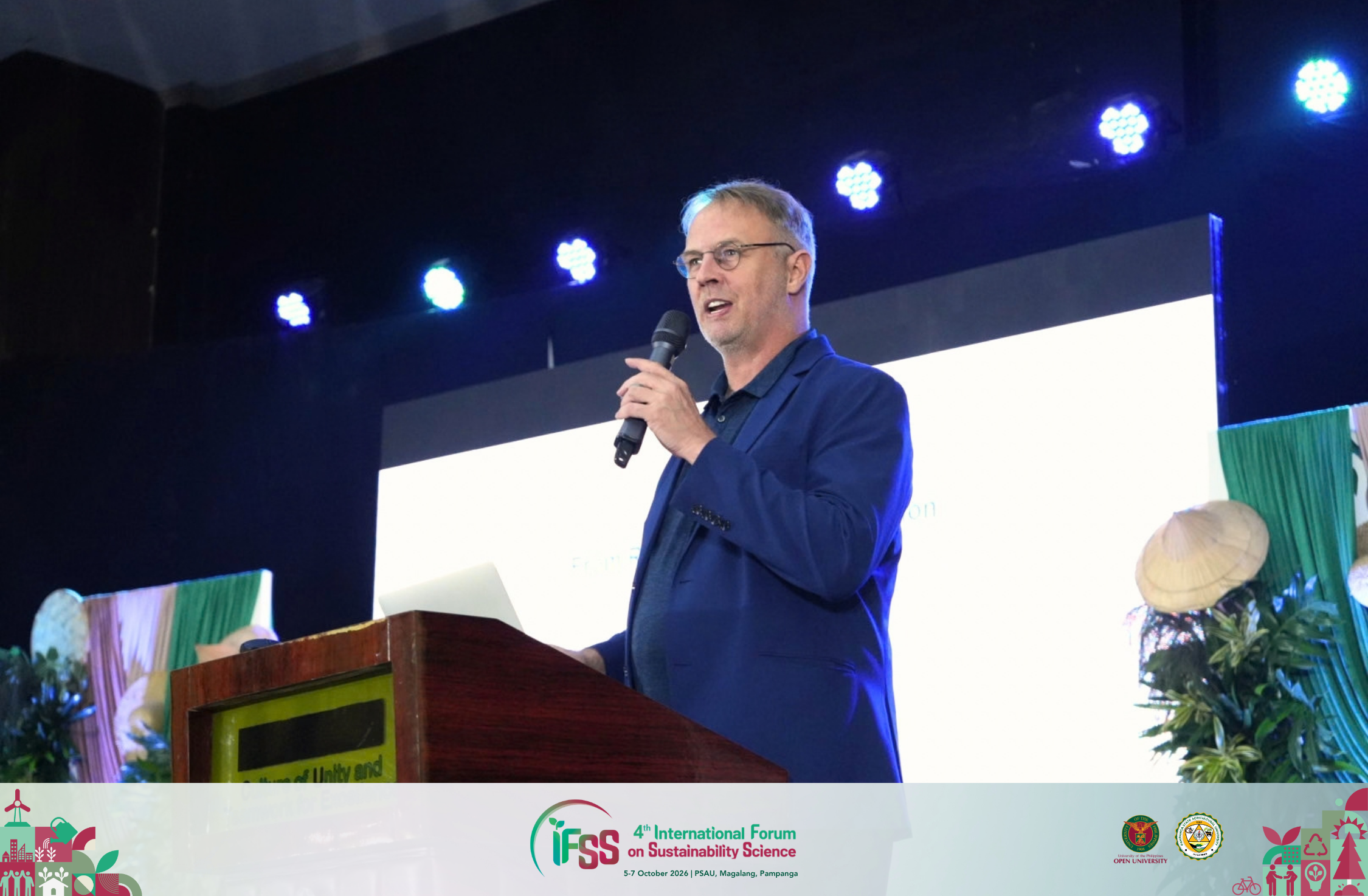
Russell Smith, president and CEO of Rizome, highlights the role of engineered bamboo in environmental restoration, sustainable livelihoods and low-carbon development at IFSS 2026.
IFSS 2026 also featured panel sessions on gender inclusion, land value taxation, climate solutions, rights of nature, sustainability governance and resilient tourism. Parallel sessions were also held for research paper presentations on sustainability and related fields.
Now in its fourth year, IFSS 2026 reflects UPOU’s commitment to fostering dialogue and collaboration among communities, Indigenous peoples, academic institutions, social enterprises, government and other partners toward inclusive, economically viable and environmentally sustainable futures.
Written by Primo Garcia with report from Marinela Hernandez | Edited by Anna Canas-Llamas | Photos by Dianne Cosinas